
Guide
Why a Door Goes Off Track Around Vienna
Vienna's 1960s-70s housing stock and cold winters put specific stress on garage door tracks. Here's what actually knocks a door off its rails and what to check first.
Local detail
What Is Going On
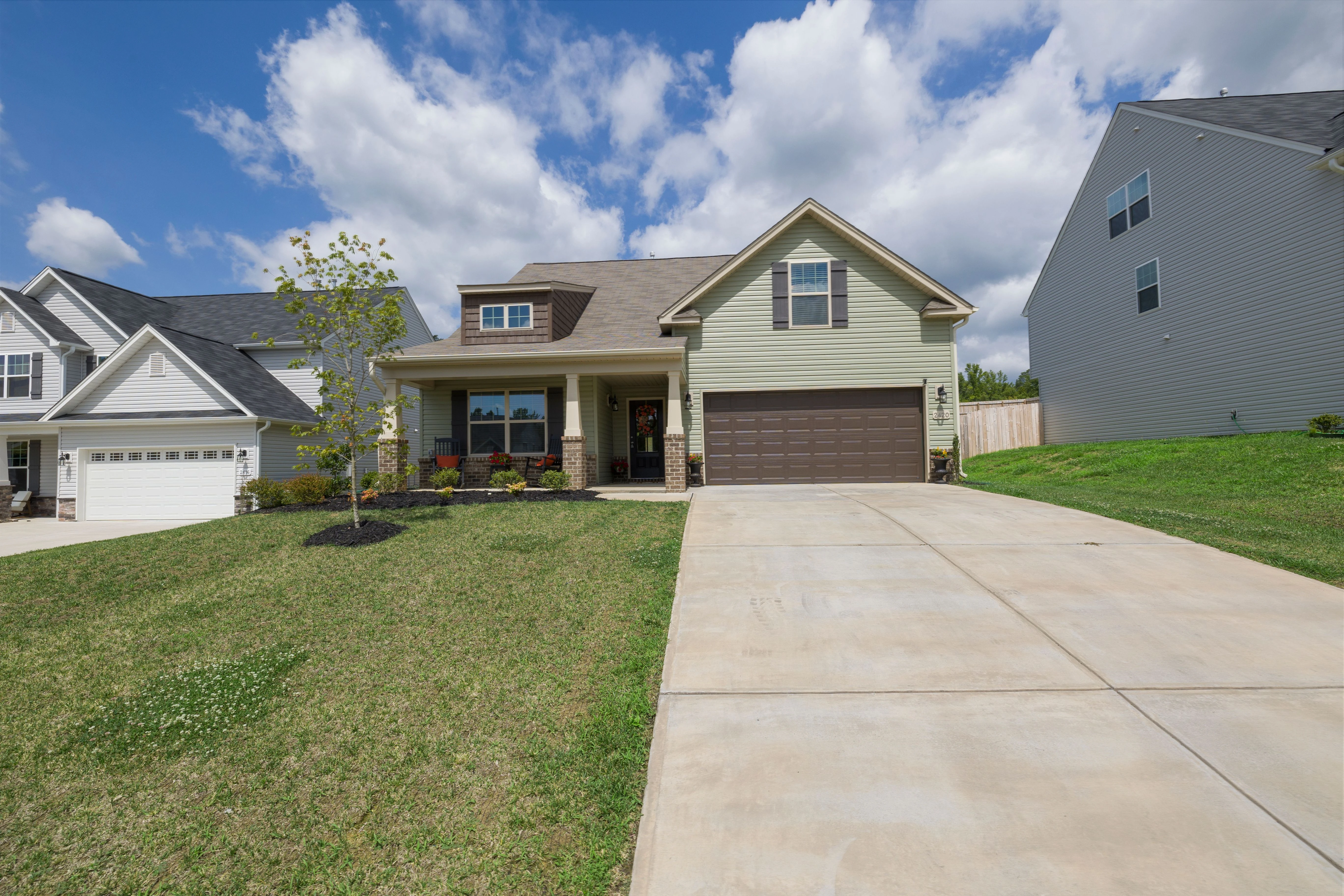
A door doesn't jump its track for no reason. Something bent the track, something pulled the rollers sideways, or something let the door rack out of square. Around here, a lot of that traces back to age. Housing in this area was built mostly between 1940 and 2015, with the median sitting at 1977, and a heavy concentration of stock going up through the 1960s and 70s across the neighborhoods near Dunn Loring, Mantua, and Pimmit Hills. That means a lot of original steel track, original hinges, and in some cases original rollers that have outlived a few openers already.
Old track wasn't built wrong, but it wasn't built for forty-plus years of thermal cycling either. Brackets loosen. Screws back out of jamb wood that's shrunk over decades. The track stays technically attached but drifts a few degrees out of plumb, and that's enough for a roller to walk off the rail on its way down. It rarely happens all at once. It happens a little at a time until the day it doesn't happen at all - the door drops crooked and stops.
On newer builds in the same service area you see a different failure: extension springs and lighter-gauge track sized for a door that's since been swapped for a heavier insulated one, putting more sideways load on hardware that wasn't spec'd for it.
The area
What the Weather Here Does to It
This is a cold-severe climate band, and that matters more for tracks than people think. Steel track contracts in a hard freeze and expands again once the garage warms up, and it does that every day of a cold snap, not just once. Track brackets that are already a little loose from age work looser with every cycle. A gap that was a sixteenth of an inch in October can be a quarter inch by February, and that's room for a roller to skip.
Cold also stiffens the lubricant in the rollers themselves, especially on the older nylon and steel rollers common in the 1960s and 70s builds mentioned above. A roller that doesn't spin freely starts to drag and chatter against the track instead of rolling smoothly through it. Drag plus a slightly bent or loose track section is the exact combination that ends with the door jumping the rail on a cold morning, usually right when you're trying to leave for work.
Humidity swings do their own damage on the fastener side - screws in wood jambs loosen with the wood movement that comes from a real winter-to-summer swing, not just a mild one. None of this is dramatic. It's cumulative, and it's the kind of thing that shows up as a track problem years after the house was built, not the year it was built.
What we find
What to Look At First
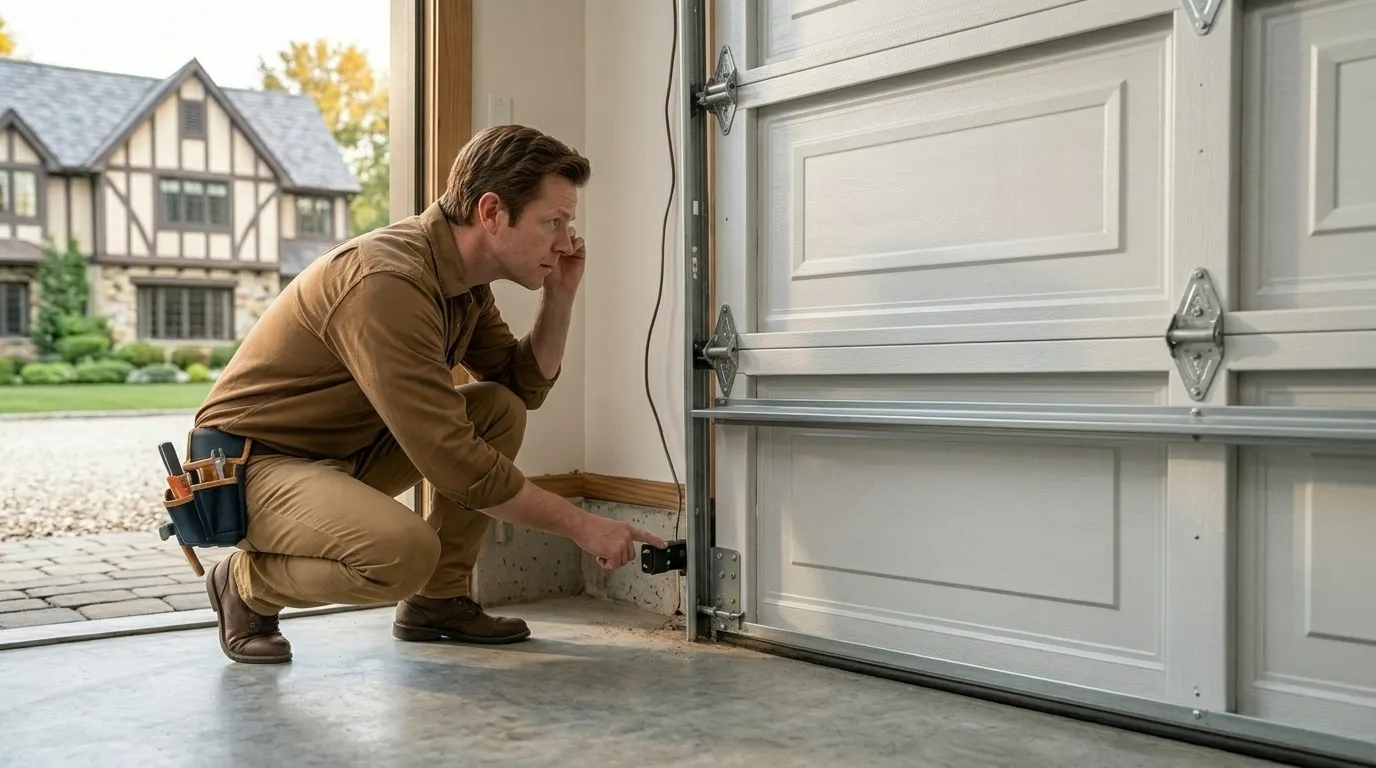
Before you assume the track is bent, check the brackets holding it to the jamb. On a lot of the older houses in this area, those brackets were installed with screws straight into softwood framing, and forty-plus years of seasonal movement is enough to work them loose without anything looking obviously wrong. Grab the track with both hands and pull. Any play at all means that's your problem, not the track itself.
Next, look at the rollers where they meet the track, especially near the bottom two feet where cold air off the slab hits hardest. Flat spots, cracked nylon, or a roller that doesn't spin when you flick it by hand are the things that cause drag in cold weather.
Last, sight down the track from the bottom. It should run dead straight to the point where it curves into the horizontal section. A kink or a spot where the rail bows outward even slightly is enough to walk a roller off, and it's easy to miss because the door still looks like it's closing fine most days.
If you're not sure what you're looking at, that's a reasonable thing to have someone check in person rather than guess from a ladder.
How we work
Leaving It Alone
Not every off-track door needs a new track. If the rail itself is straight and the problem is loose brackets or a couple of bad rollers, that's a repair, not a replacement, and it's usually the cheaper and correct call. We won't tell you to replace track that's still straight just because it's original to a 1970s build - a lot of that old steel is heavier gauge than what goes in today.
Where replacement does make sense is when the track has an actual bend or kink in it. Track doesn't bend back reliably once it's kinked, and forcing a door through a bent section just re-damages new rollers. If you're on the fence, the honest answer is that a straight track with worn rollers is a small job, and a bent track is not - and you generally can't tell which one you have without opening the garage door and looking closely at both.
One limit worth naming plainly: we can tell you what's likely going on given the age and layout of houses in this area, but we can't diagnose a specific door without seeing it. Anything here is a starting point for what to check, not a substitute for that.
Questions
Common questions
Why did my garage door suddenly come off the track in cold weather?
Cold makes steel track contract and stiffens roller lubricant, so a track bracket that's already a little loose from years of seasonal movement finally lets a roller slip off the rail. It's rarely sudden damage - it's usually months of small drift that finally gave way on a cold morning.
Is my garage door track original to the house?
Possibly. Housing in this area was built mostly between 1940 and 2015, with a lot of it going up in the 1960s and 70s, so plenty of garages still have original steel track and hardware from that era. Original track isn't automatically bad, but it's worth checking the brackets and rollers if it's never been touched.
Do I need a new track or just new rollers?
If the track itself sights straight from bottom to curve and the brackets are tight, worn rollers are usually the fix, not the whole track. A visible bend or kink in the rail is a different problem and generally means replacing that section rather than trying to straighten it.
Ready when you are
Need a garage door sorted in Vienna?
Vienna Garage Door Pros repairs and installs garage doors, springs and openers in Vienna, VA and the surrounding area.