
Guide
Why Vienna's Garage Doors Wear the Way They Do
Most Vienna garage doors date to the 1960s-70s building boom. Here's what that housing stock and cold-climate swings actually do to springs, tracks, and panels.
Local detail
What Is Going On
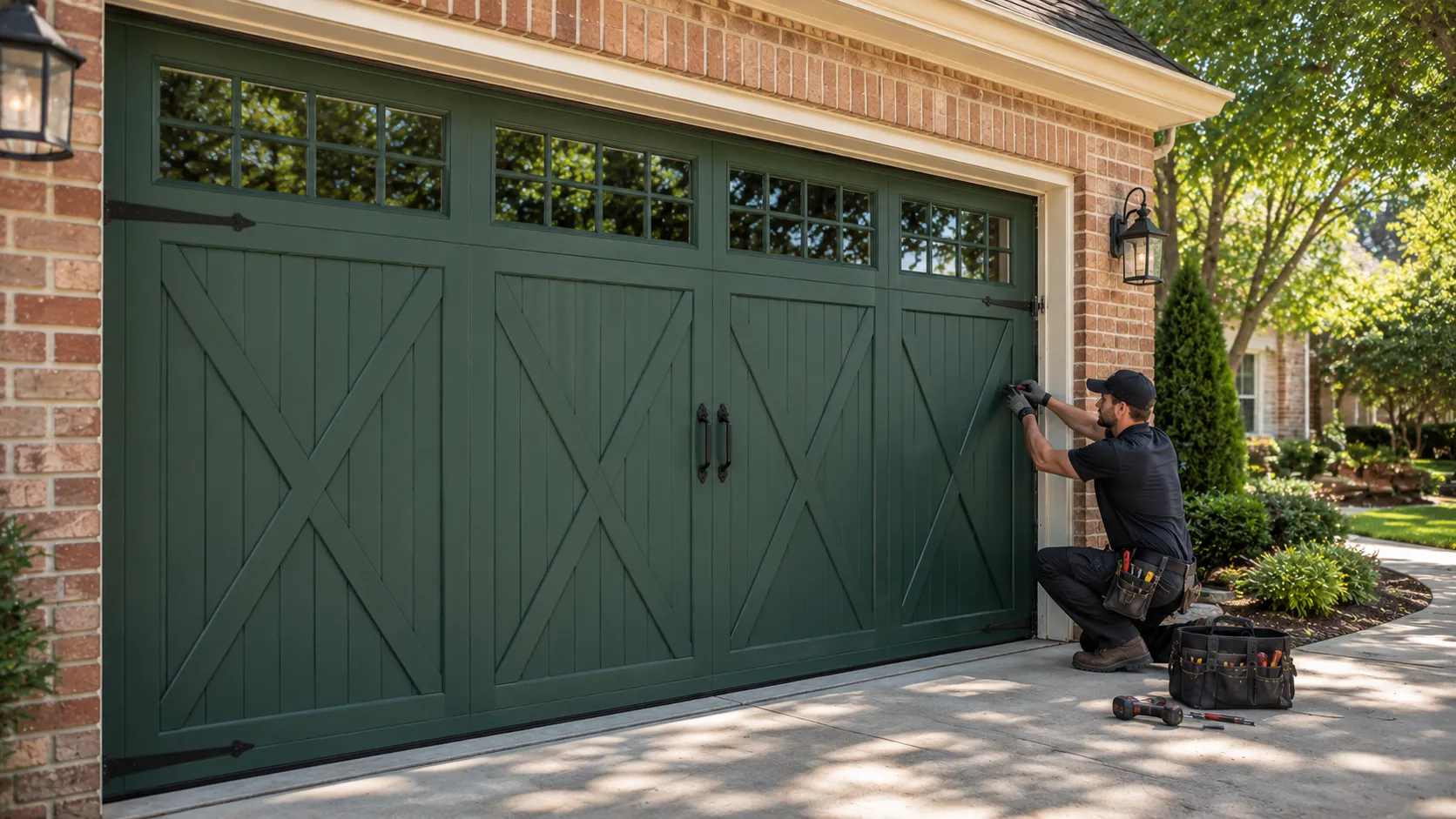
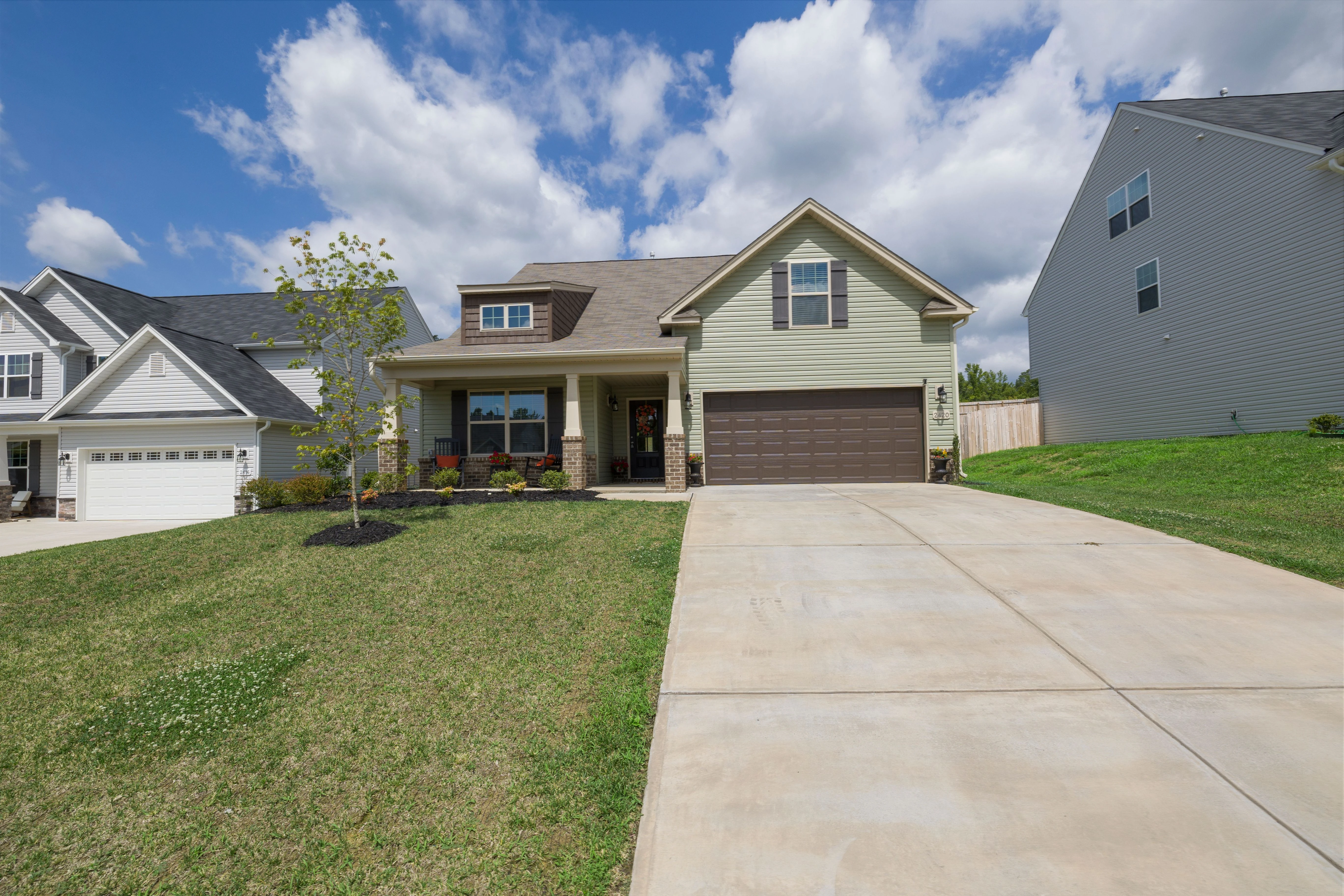
Vienna's housing stock runs from 1940 up through 2015, but the median build year sits at 1977, and most of the doors we get called out on sit in that 1960s-70s band that covers the bulk of the 24 named areas around here, from Dunn Loring and Wolf Trap in close to Mantua and Pimmit Hills a few miles out. A door installed when a house went up in, say, 1968 has had over fifty years of cycles on its hardware even if the panel itself was swapped out once along the way. That matters because torsion springs are rated in cycles, not years, and the springs on original openers from that era are long past their rated life whether or not they've ever failed. What we see is not one big problem.
It's cumulative: a track that's been re-shimmed twice, a spring that was replaced with a same-size unit instead of one matched to a heavier insulated panel added later, an opener bolted to framing that's shifted slightly over five decades. None of that shows up as a single dramatic failure. It shows up as a door that's gotten louder, slower, and harder to trust, which is usually the point where a homeowner calls.
The area
What the Weather Here Does to It
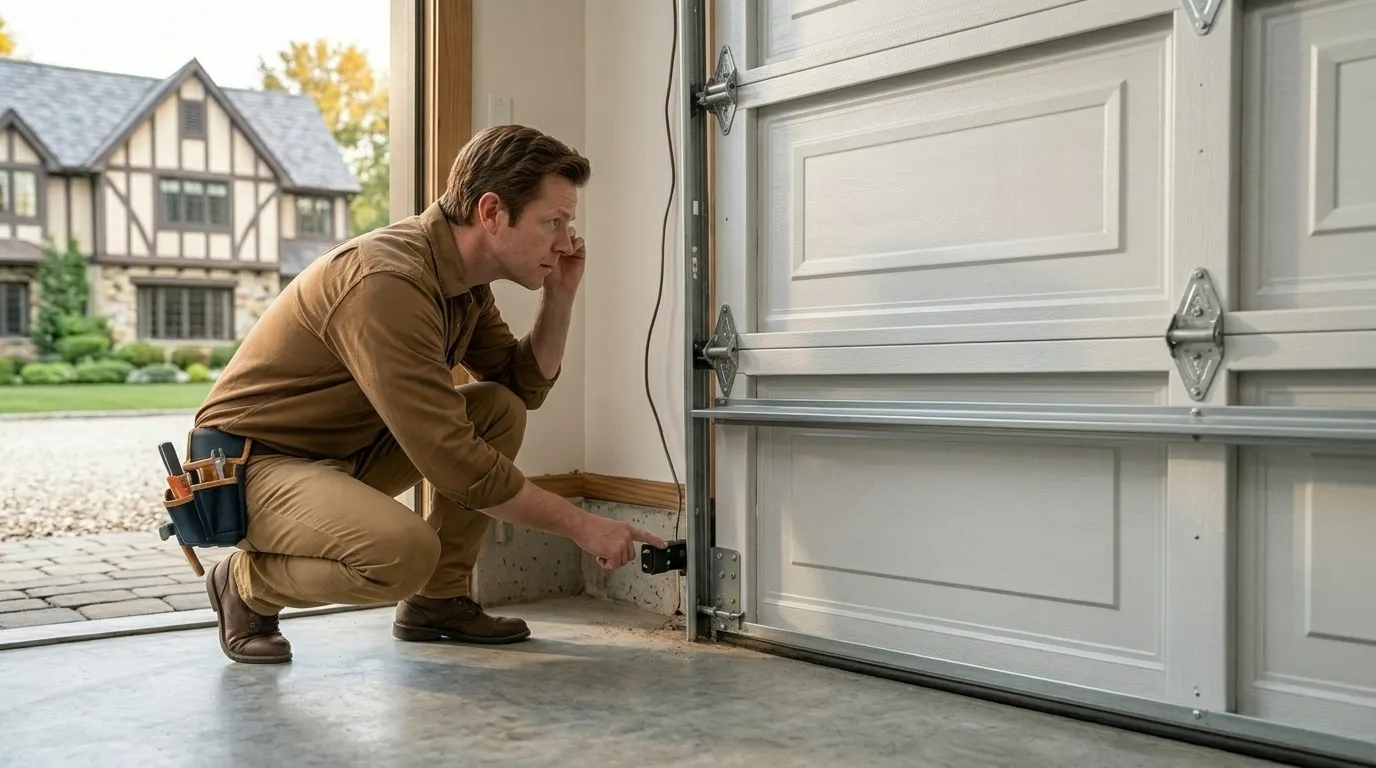
This area sits in a cold climate band with severe swings, and that cold does specific, physical things to a garage door system that a mild climate never would. Steel torsion springs lose tension as temperatures drop, so a spring that's already marginal from age will feel noticeably weaker on a January morning than it does in July. Lubricant on rollers and hinges thickens in the cold, which adds drag right when the opener motor has less slack to work with.
On houses built in that 1960s-70s window, weatherstripping at the bottom panel was often never upgraded, so cold air finds the gap and the wood or steel panel itself contracts slightly, which can throw an already-marginal alignment out further. None of this is dramatic on its own. It's why a door that worked fine in October starts binding or reversing on its own in the middle of a cold snap, and why a lot of our winter calls are doors that were already on borrowed time before the cold made it obvious.
What we find
What to Look At First
Given the age spread across Vienna and the surrounding areas out toward North Springfield and Fairfax Station, the first thing worth checking isn't the opener, it's the spring and the track alignment together. If the door is loud going up but the opener sounds fine, that's usually track or roller wear, not motor trouble. If the door feels heavy to lift by hand with the opener disconnected, that's a spring that's lost tension, and on a house from the 1960s-70s stock that's a strong bet given the cycle count involved.
Check the bottom panel too. Original steel panels from that era rarely have the insulation or the reinforced bottom seal that later doors do, and a warped or cracked bottom section is common enough on doors of that vintage that it's worth a look before you assume the problem is electrical. None of this requires tools, just five minutes with the door disconnected from the opener and moved by hand.
How we work
Leaving It Alone
Not every issue on a Vienna-area door needs a service call right away, and we'd rather say that plainly than push a visit that isn't worth your money. A slightly noisy roller with no other symptoms can often go months before it needs attention. A door that's simply slow to close in cold weather but reverses correctly and seals fine isn't a safety issue, it's a cold-weather quirk of the era of hardware it's running on.
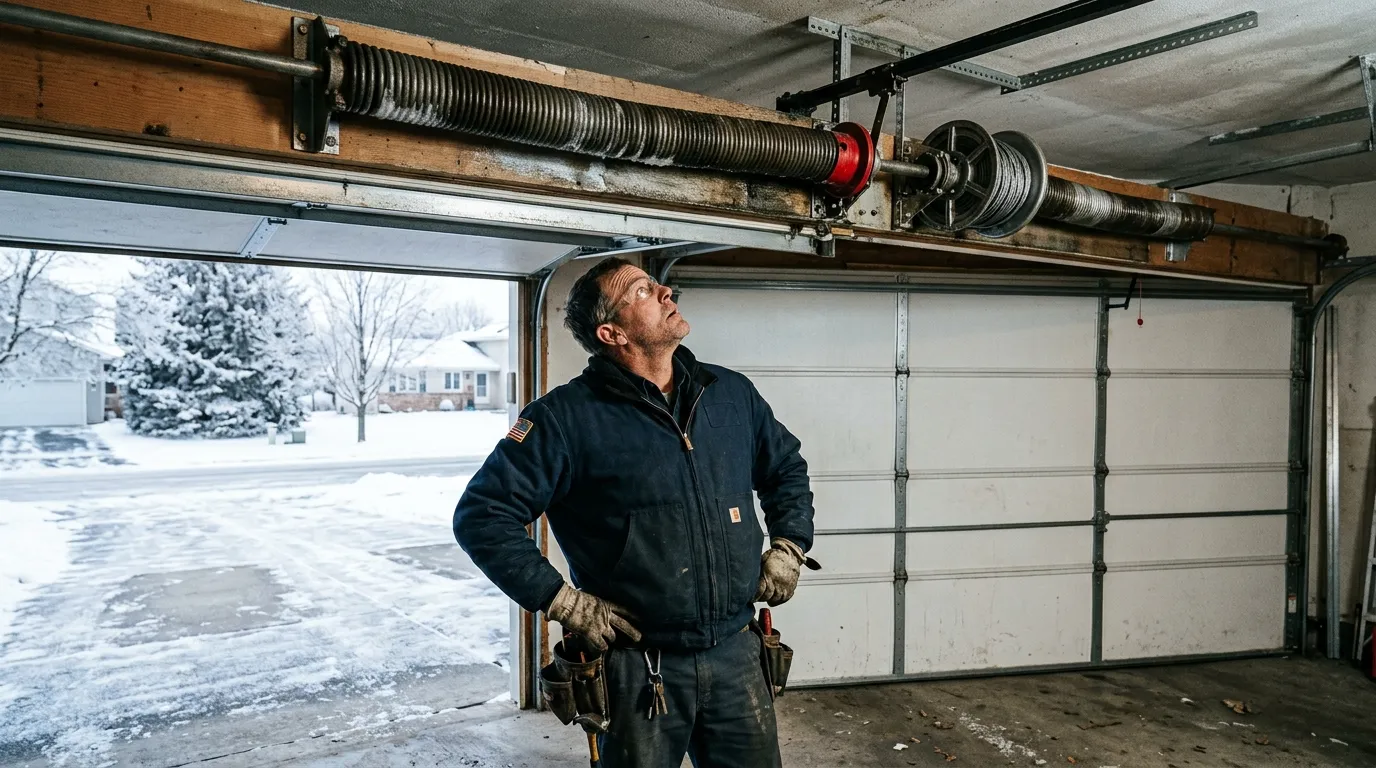
Where we draw the line is anything involving the spring itself: a visibly gapped or rusted torsion spring on a door from that original 1960s-70s stock is not something to wait on, because those springs are under real tension and they don't fail gently. If you're not sure which category your door falls into, we're not going to talk you into a full replacement over the phone. Sometimes the honest answer is a $20 part, and sometimes it's a new spring set matched to the actual weight of the door, not the original rating from decades ago.
Questions
Common questions
Why does my garage door get harder to open in the winter?
Cold makes torsion springs lose some of their lift and thickens lubricant on rollers and hinges, adding drag right when the spring has less tension to spare. On an older Vienna-area door already worn from decades of cycles, that combination is often what pushes a marginal door into one that visibly struggles or won't fully close.
My house was built in the 1960s. Is the original garage door hardware still in there?
Often the springs and track hardware are original or close to it even if the panel was swapped once. Given how much of Vienna's housing stock dates to that era, cycle counts on that hardware are typically well past what the springs were rated for, which is why age-related failure is common even without an obvious cause.
Is a slow-closing door in cold weather a real problem?
Not necessarily. If it still closes fully, seals, and reverses correctly when it hits something, that's often just cold-weather stiffness in the rollers and lubricant, not a mechanical fault. It's worth watching, but it's not automatically a service call.
Ready when you are
Need a garage door sorted in Vienna?
Vienna Garage Door Pros repairs and installs garage doors, springs and openers in Vienna, VA and the surrounding area.