
Guide
What Your Garage Door Is Telling You
In Vienna, most houses date to the 1960s and 70s, and cold winters wear on original hardware. Here's what those noises actually mean before you call anyone.
Local detail
What Is Going On
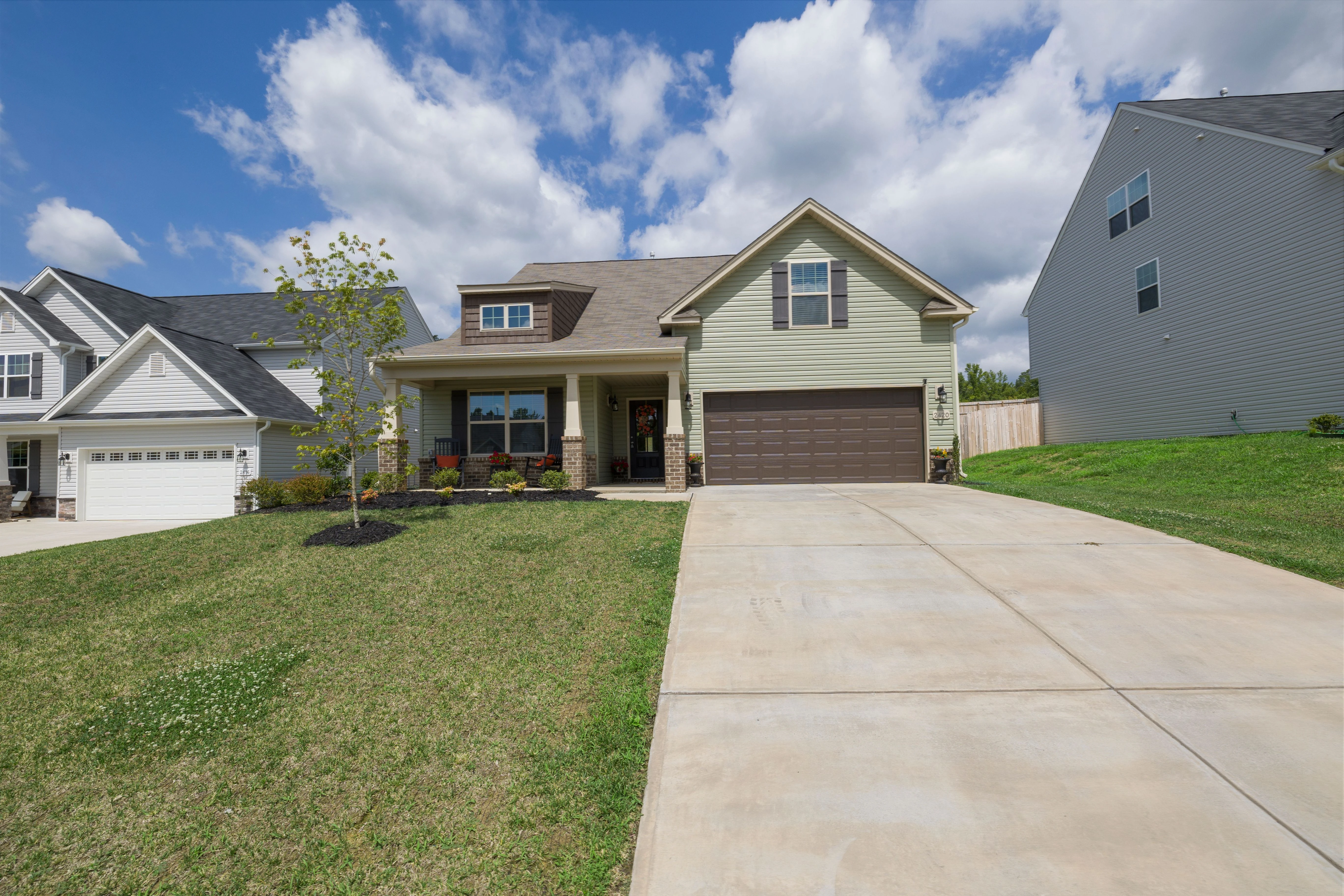
Most of the houses on this side of Vienna went up between the 1960s and 70s, with the wider housing stock in the service area spanning 1940 to 2015 and a median build year of 1977. That matters more than people think. A door and its hardware have a working life, and a torsion spring rated for a certain number of cycles doesn't care what decade it is when it finally lets go - it cares how many times it's opened and closed.
A house built when the median Vienna home went up, 1977, has a garage door system that's pushing fifty years old if nobody's touched it. Springs get replaced, sure, but tracks, hinges, and the mounting hardware bolted into original framing often aren't. So when a door starts groaning on the way up, or a panel shudders instead of gliding, it's usually not a mystery. It's a house telling you its age. Across 24 named areas here, we see the same pattern: a 1960s or 70s build, original one-piece or sectional door, hardware nobody's inspected since it was installed. That's the starting point for almost every call we get, and it's why the noise is worth listening to before it gets worse.
The area
What the Weather Here Does to It
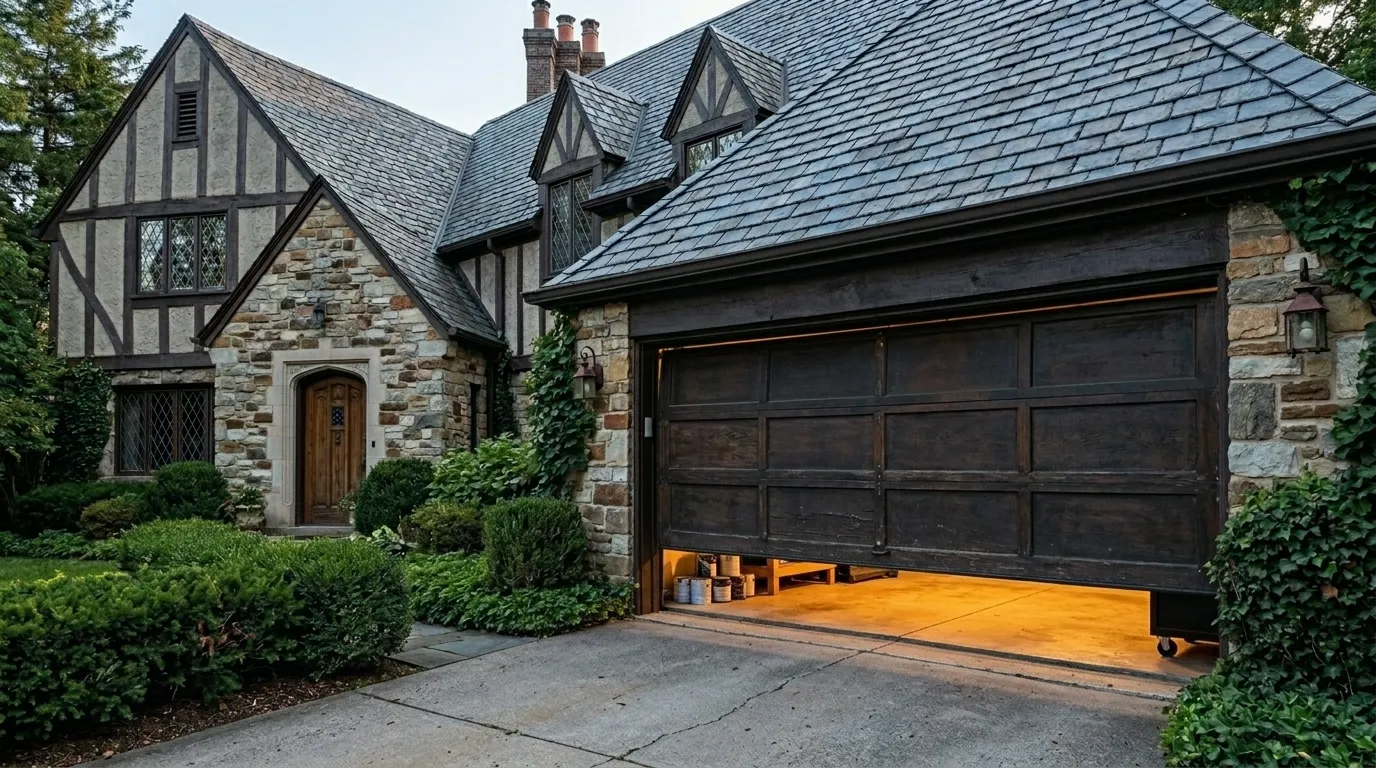
Vienna sits in a climate band the federal data marks as cold and severe, and that's not a small detail for a garage door. Steel contracts in the cold. A torsion spring that's slightly undersized or already fatigued will bind or snap on the coldest mornings, not the mild ones, because contracted metal has less give left in it.
Lubricant thickens too. Grease that moved fine on rollers and hinges in October turns gummy by January, and a door that used to run quiet starts grinding through the whole cycle. Weatherstripping along the bottom panel gets brittle in sustained cold and cracks instead of flexing, which lets in the draft that makes an attached garage feel like an icebox.
None of this is unique to any one house - it's what a severe cold climate does to moving steel parts and rubber seals over a winter, and then another winter, repeated across decades on hardware that was never designed to be permanent. The wear shows up first as sound: a squeal on the second roller, a thud where the spring used to move smooth. That sound is the cold doing its work on old parts, and it's worth paying attention to before the part fails outright, usually on the coldest morning of the year, with the car trapped inside.
What we find
What to Look At First
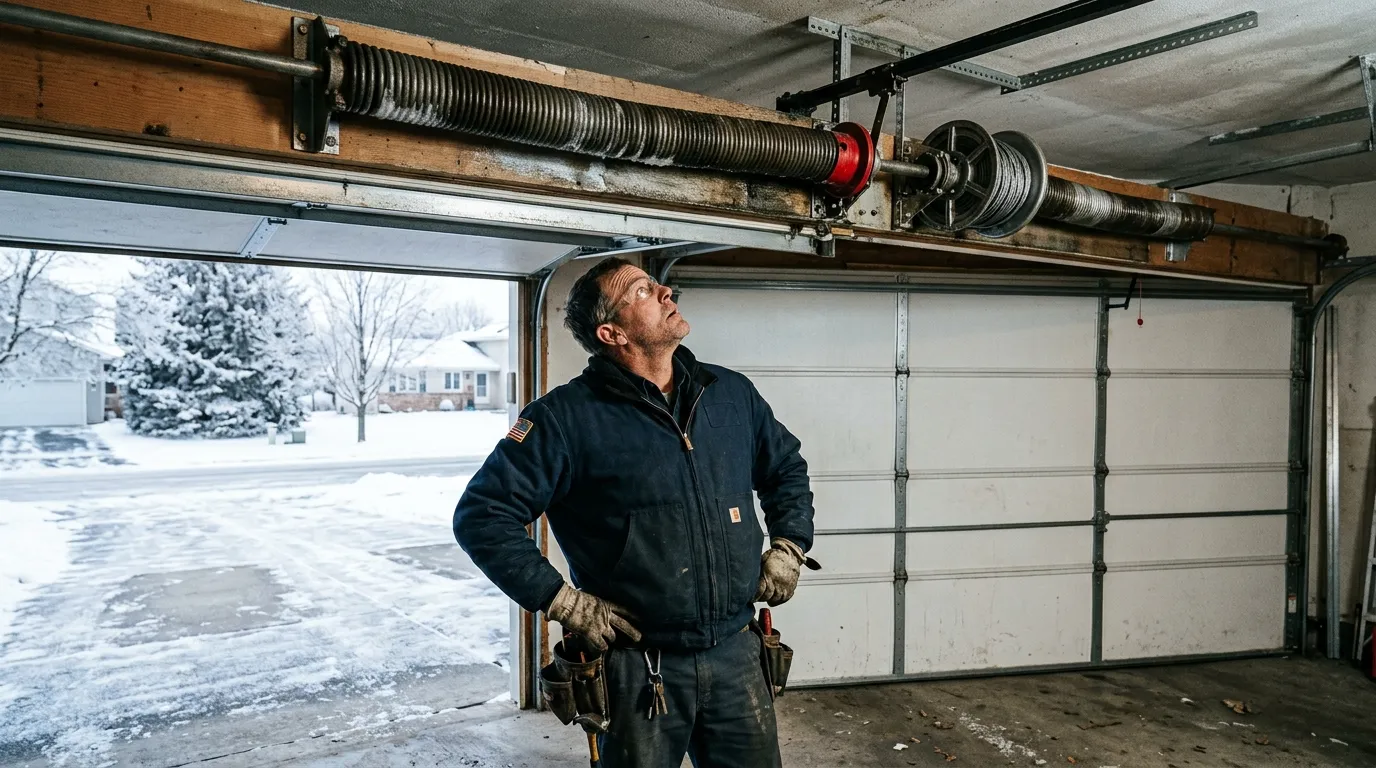
Start with the springs. If your door was installed anywhere near when the neighborhood was built - that 1960s-to-70s wave that makes up most of Vienna's stock - the torsion spring has likely been cycled tens of thousands of times. Look for a visible gap in the coil when the door is down. That gap means it's broken, even if the door still limps open on the opener's brute force.
Next, the rollers and track. Original steel rollers from that era are noisier and wear faster than what's sold today. A grinding sound low on the door, especially in the first few inches of travel, usually means a roller has gone bad in its bracket, not that the whole track is bent.
Check the weatherstrip at the bottom panel for cracking - press it with a thumb. Brittle rubber that doesn't spring back has hardened past the point of sealing, which is common after a few cold seasons and worth replacing on its own, no other repair needed.
Last, listen for a hum or hesitation right at the start of the opener's cycle. That's often a capacitor or a strained spring making the motor work harder than it should, and it tends to get worse, not better, on its own.
How we work
Leaving It Alone
Here's the honest part: not every noise needs a service call. A door that squeaks but opens smooth, holds its position, and doesn't drift down on its own is probably fine with a shot of the right lubricant on the hinges and rollers. We don't recommend replacing hardware that's still doing its job just because it's original to a 1970s build - that's money spent on a part that hasn't failed.
What we don't do is guess at spring tension over the phone. Torsion springs vary by door weight and drum size, and telling a homeowner what to buy sight unseen is how people get hurt or replace the wrong part. If a spring's already broken, don't try to open the door with the opener - that strains the motor and can bend the track, turning a spring job into a bigger one.
Parts for older doors, especially anything sized for hardware from that original 1960s-70s stock, sometimes take longer to source than a same-week repair on a newer door. That's a real limitation, not an excuse - it's worth knowing going in if your door is one of the older ones on the street.
Questions
Common questions
My garage door is loud but still works. Do I need to call someone?
Not necessarily. If it opens and closes fully, holds position, and the noise is a steady squeak rather than a grind or a bang, it's often just dry hinges or rollers. Lubricate the moving metal parts, not the track itself, and see if it quiets down before assuming anything's broken.
Why does my door act up more in January than in summer?
Cold steel contracts, and grease that lubricates smoothly in warm weather thickens up in winter. Vienna sits in a cold, severe climate band, so a spring or roller that's already worn tends to show its wear first on the coldest mornings, when the metal has the least flex left in it.
How do I know if my door's hardware is original to the house?
If your house was built during Vienna's main construction wave, roughly the 1960s and 70s, and you haven't had a spring or opener replaced that you know of, there's a good chance the core hardware is original. Look for a manufacture date stamped on the spring or opener unit if it's visible.
Is it ever fine to just leave a noisy door alone?
Sometimes, yes. A squeaky hinge with no other symptoms usually just needs lubricant, not a repair call. We'd rather tell you that than send someone out for a five-minute fix. If the noise changes to a grind, thud, or the door starts moving unevenly, that's when it's worth a look.
Ready when you are
Need a garage door sorted in Vienna?
Vienna Garage Door Pros repairs and installs garage doors, springs and openers in Vienna, VA and the surrounding area.