
Guide
How Vienna's Older Housing Stock Affects Your Garage Door
Vienna's housing spans 1940 to 2015, mostly 1960s-70s stock, and cold winters push worn seals into real draughts fast, especially on older torsion doors.
Local detail
What Is Going On
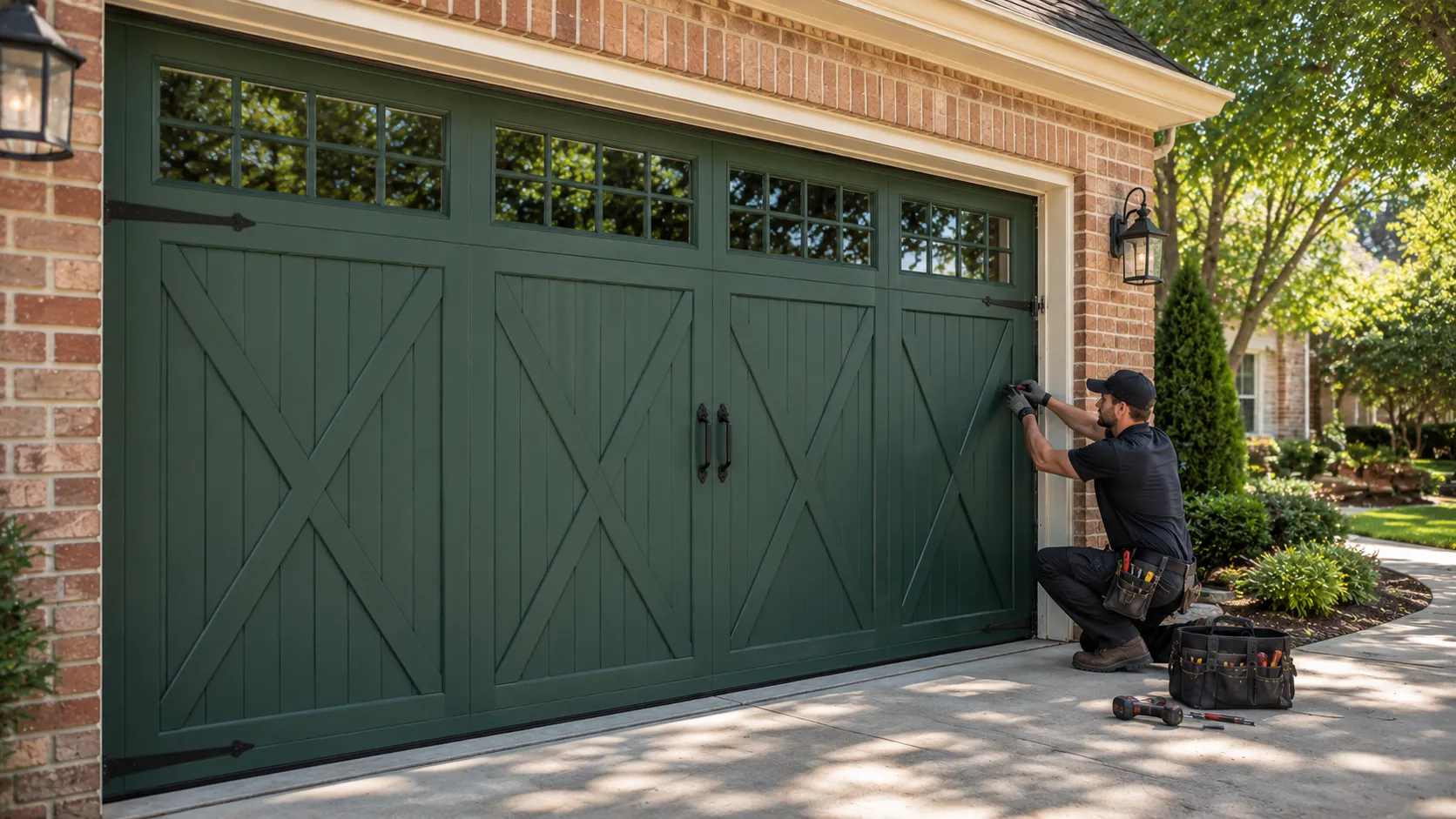
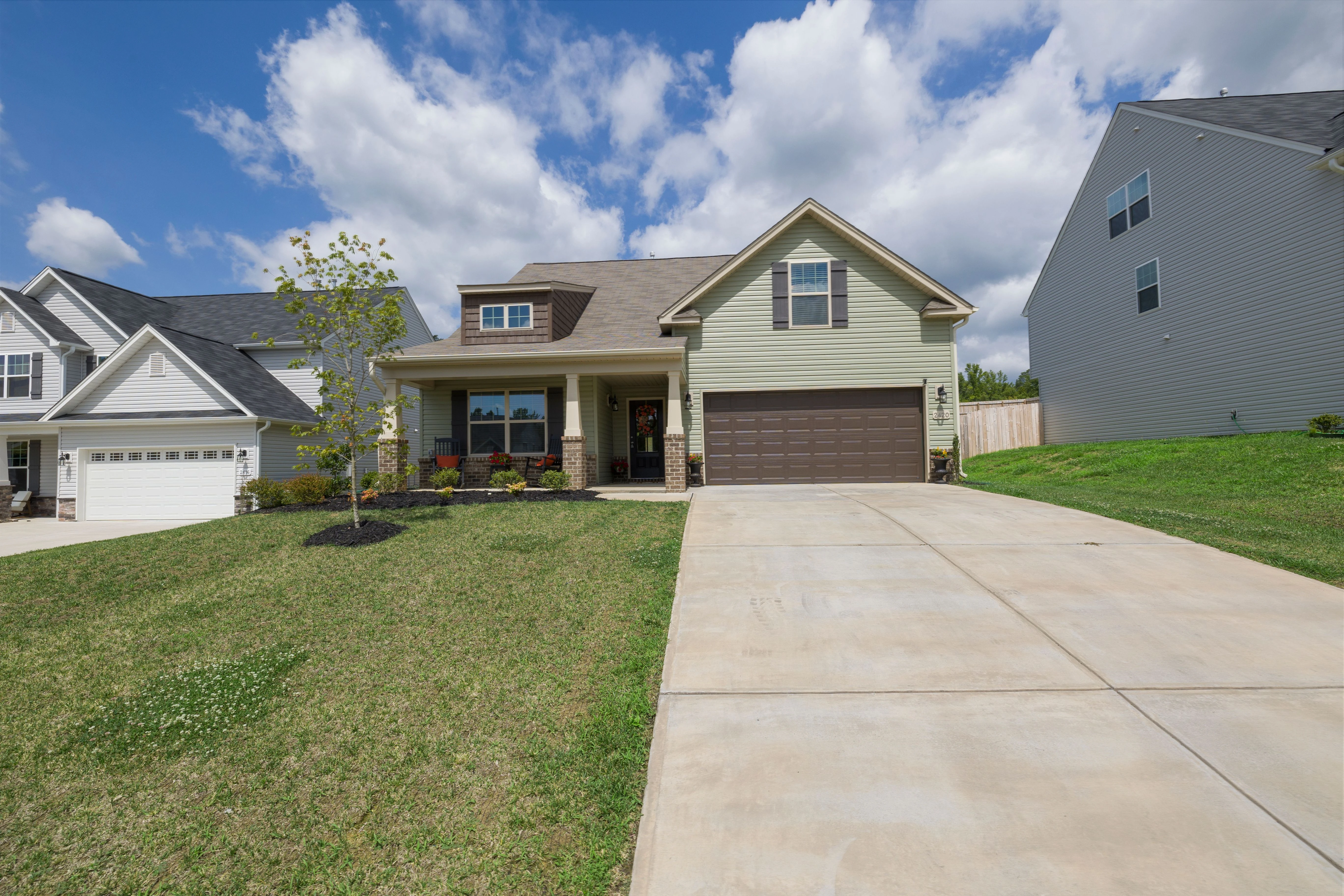
Most of the houses in Vienna's service area went up between 1940 and 2015, with the median build year landing around 1977. That's not one uniform wave of construction - it's decades of additions, teardown-rebuilds, and infill layered across two dozen named areas near Dunn Loring, Wolf Trap, Mantua, and Pimmit Hills. What that means for a garage door: the hardware under a lot of these doors was sized for a 1970s steel panel door, then the panel got swapped out for something heavier or wider decades later, and the springs and track never got recalculated to match.
A door that looks fine from the driveway can be running on torsion hardware that's fighting the wrong weight class. This isn't a problem you'd find in a subdivision built in one five-year push - it's what happens when a neighborhood's garage doors were installed, replaced, and half-replaced across forty-plus years. If your door is original to a house built in the 1960s or 70s, the odds are decent that at least one component - spring, cable drum, or opener - has already been swapped once, maybe by whoever owned the house before you, and maybe without matching gauge to the rest of the setup.
The area
What the Weather Here Does to It
Vienna sits in a climate band that federal data classifies as cold and severe, and that matters more for a garage door than almost any other exterior fixture in the house. A garage door is the largest moving opening in most homes, and it's usually the least insulated. When winter temperatures swing hard, the rubber weatherstripping along the bottom seal and side jambs hardens and shrinks faster than people expect - it's not a ten-year part in this climate, it's closer to a five-or-six-year part.
Once that seal stiffens, you get weather seals and draughts along the bottom edge that you can feel standing in the garage on a cold morning. Steel panels also contract enough in cold weather to change how a door sits in its track by a few millimeters, which is enough to bind a roller that was already worn. None of this is dramatic - no one's door falls off the track from cold alone - but it's the reason a door that closed clean in October starts scraping or leaving a gap by January.
The fix is almost never the opener. It's the seal, the track alignment, or both, and figuring out which one comes first.
What we find
What to Look At First
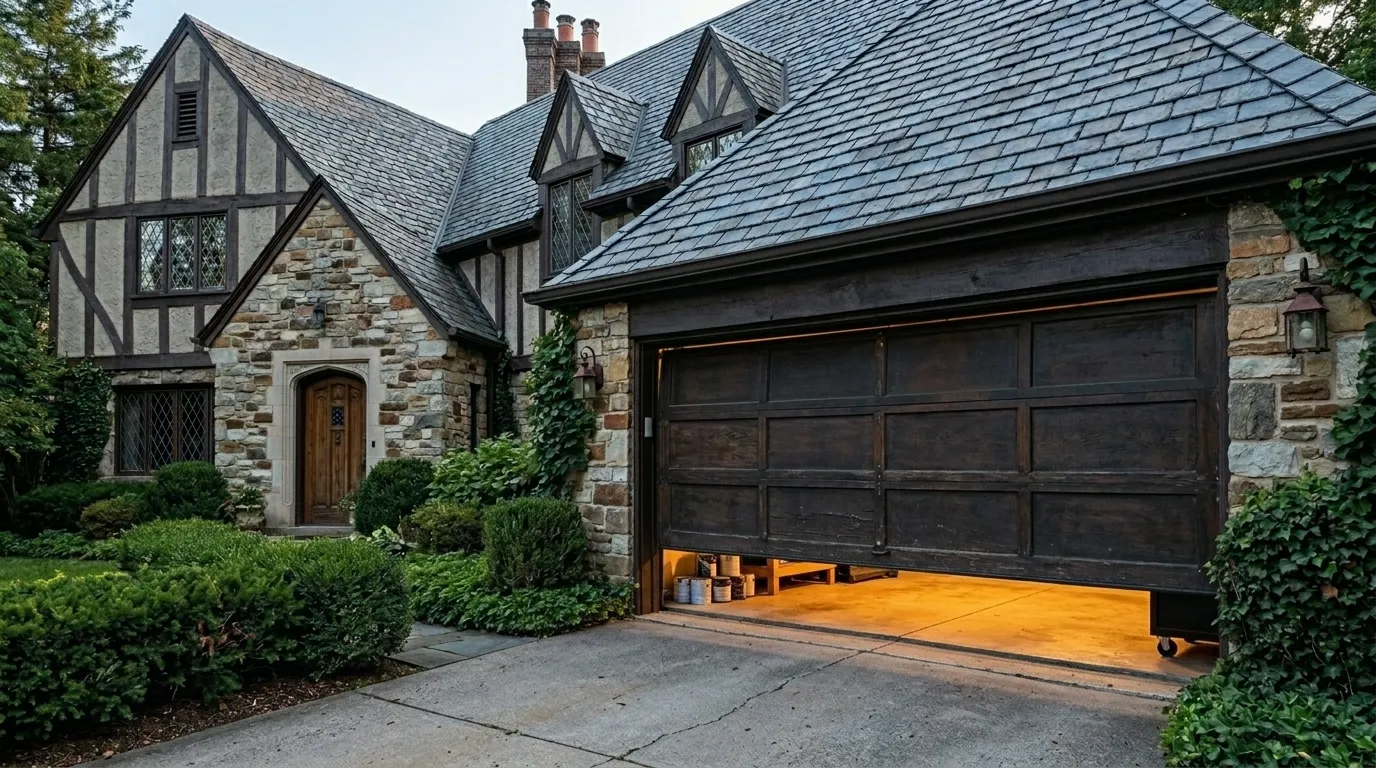
Start with the weatherstripping. It's cheap, its failure is what causes the draughts, and it's the part most owners never check. Second, look at the bottom seal where it meets the concrete slab - in a sloped driveway, uneven wear here shows up as light coming through one corner and not the other. Third, if your house falls in the 1960s-70s stock that makes up most of the area, check whether the torsion spring looks original or has a replacement sticker on it; mismatched spring wire gauge is common in this housing stock because owners have swapped panels over the decades without recalculating spring weight.
Fourth, run the opener's auto-reverse test if you have one from that era - older openers weren't built with the safety sensors that are standard now, and if yours never had one added, that's worth flagging before anything else on this list. This isn't an exhaustive inspection. It's the order that catches the most common cold-climate, older-stock problems first, before you spend money on a part that isn't the one actually causing the symptom you're seeing.
How we work
Leaving It Alone
Not everything on a garage door needs fixing right away. A stiff seal that lets in a little cold air isn't an emergency, and it doesn't need a same-day call. With median household income in this service area around $150,707 across roughly 92,675 households, plenty of owners here default to replacing rather than patching once a door is into its second or third decade - that's a reasonable call on a door original to a 1970s build, less reasonable on something installed in the last ten years. Where we won't spend your money: if the door itself is sound and the only issue is a seal or a bent piece of trim, that's a parts fix, not a new door.
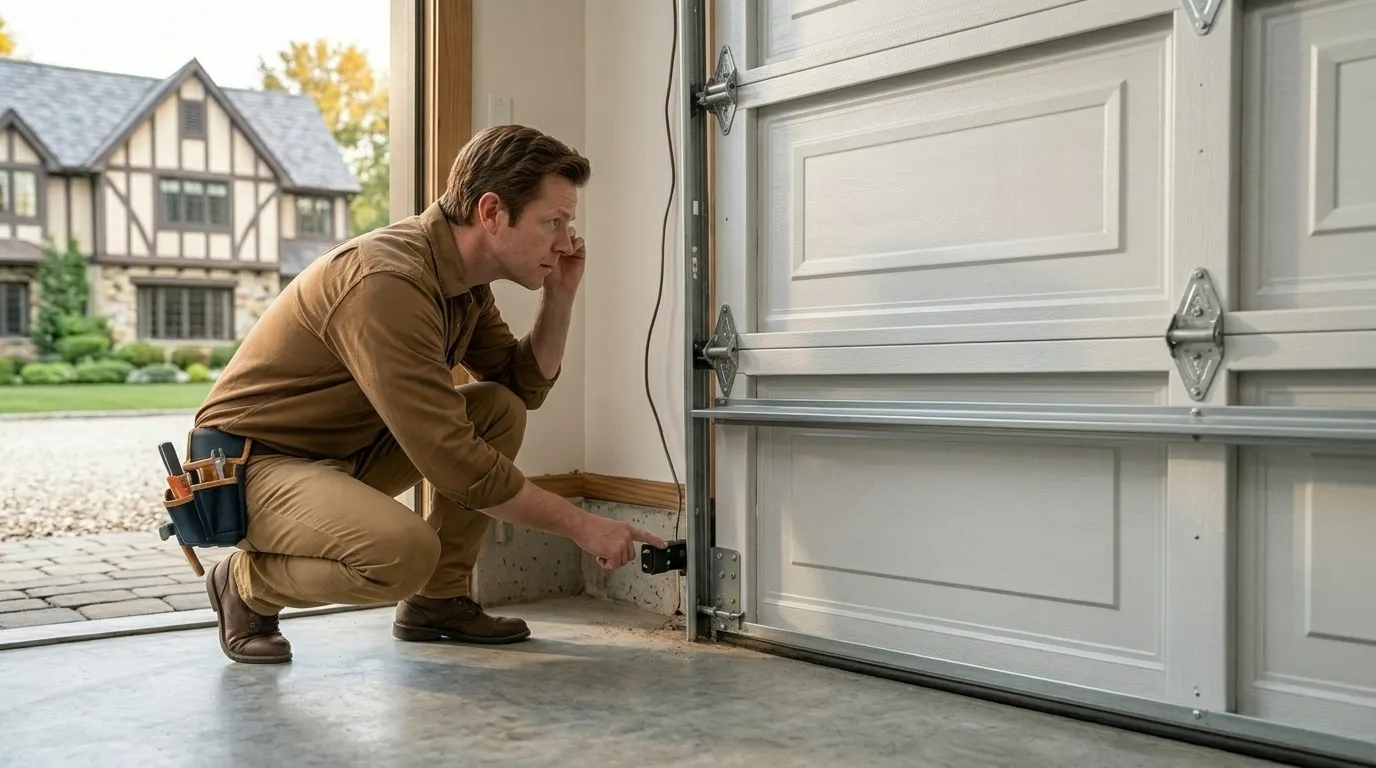
Where we'll tell you to slow down: a torsion spring on a door old enough that the cable drums and hardware don't match current parts - swapping just the spring on a mismatched setup can leave a hazard the new part didn't cause and won't fix by itself. We also don't carry every panel style for doors from the 1960s or 70s; some of that stock is discontinued, and matching an existing panel exactly sometimes isn't possible. That's a straight answer, not a push toward a full replacement you don't need yet.
Questions
Common questions
Why does my garage door leave a gap at the bottom every winter?
In this climate band, rated cold and severe, rubber weatherstripping hardens and shrinks faster than in milder areas - often in five or six years instead of ten. Once it stiffens, it pulls away from the slab at the corners first. That gap is almost always the seal, not the door panel or the opener.
My house was built in the 1970s - does that affect garage door repair?
Yes. Housing in this service area runs from 1940 to 2015 with a median build year around 1977, and a lot of that 1960s-70s stock has had panels swapped without the spring and track hardware being recalculated to match. That mismatch is worth checking before assuming the opener is the problem.
Should I repair an old door or replace it?
Depends what's wrong. If it's a seal or trim, that's a cheap fix regardless of the door's age. If it's a torsion spring on hardware that doesn't match the rest of the setup, or the panel style is discontinued, replacement often makes more sense than chasing parts that no longer fit.
Ready when you are
Need a garage door sorted in Vienna?
Vienna Garage Door Pros repairs and installs garage doors, springs and openers in Vienna, VA and the surrounding area.