Fort Hunt, Vienna

Garage Door Maintenance for Fort Hunt's 1960s Housing Stock

Fort Hunt homes date mostly to the 1960s, meaning original torsion hardware and steel that's spent decades in cold winters. Tune-ups from our Vienna crew, 16 miles out.

Garage Door Maintenance for Fort Hunt's 1960s Housing Stock in Vienna
Serving Vienna, VABackground-checked techsHonest, upfront pricingFast local response

Job timing

Time on the Job

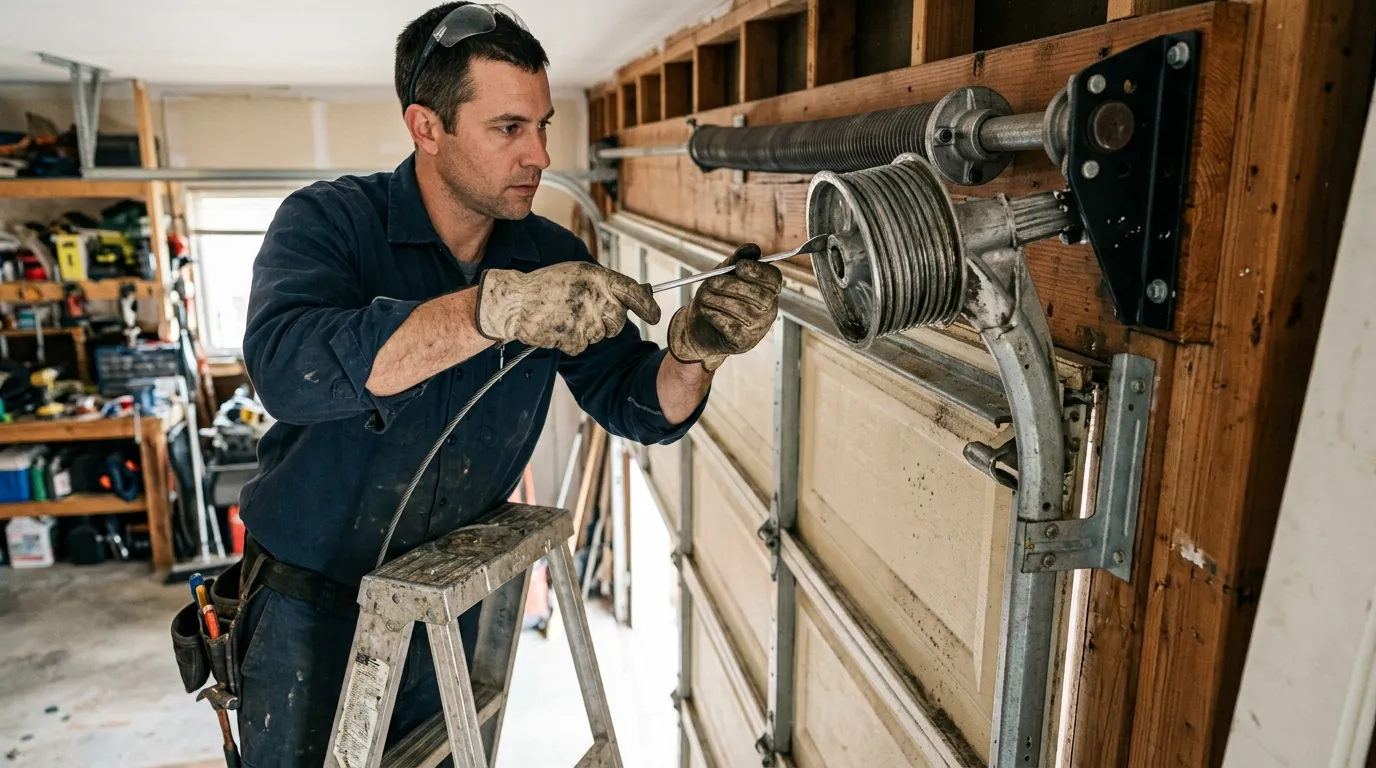
The fault we see most in Fort Hunt isn't a broken spring out of nowhere - it's a torsion spring that's been cycling since the house was built and finally gives out on a cold morning.

Original spring service limit

Fort Hunt's homes went up mostly around 1963, which puts a lot of doors here on their second or third opener but sometimes still the original spring shaft and end bearings. That hardware wasn't built for a fifty-year service life, and nobody expected it to run that long.

Panel steel fatigue aging

A door that age also tends to have thinner panel steel than what's sold today, and steel that's flexed through decades of hot summers and cold winters develops fatigue you can't see from the driveway.

Thermal cycling hardware stress

The service area sits in a cold-climate band with real seasonal swings, and that thermal cycling is what ages torsion springs and hinges faster than the mileage alone would suggest. We come out from Vienna, about 16 miles away, so a maintenance visit here gets scheduled on the route rather than as a drop-in - we don't keep a branch in Fort Hunt.

DIY or pro

Can You Do This Yourself

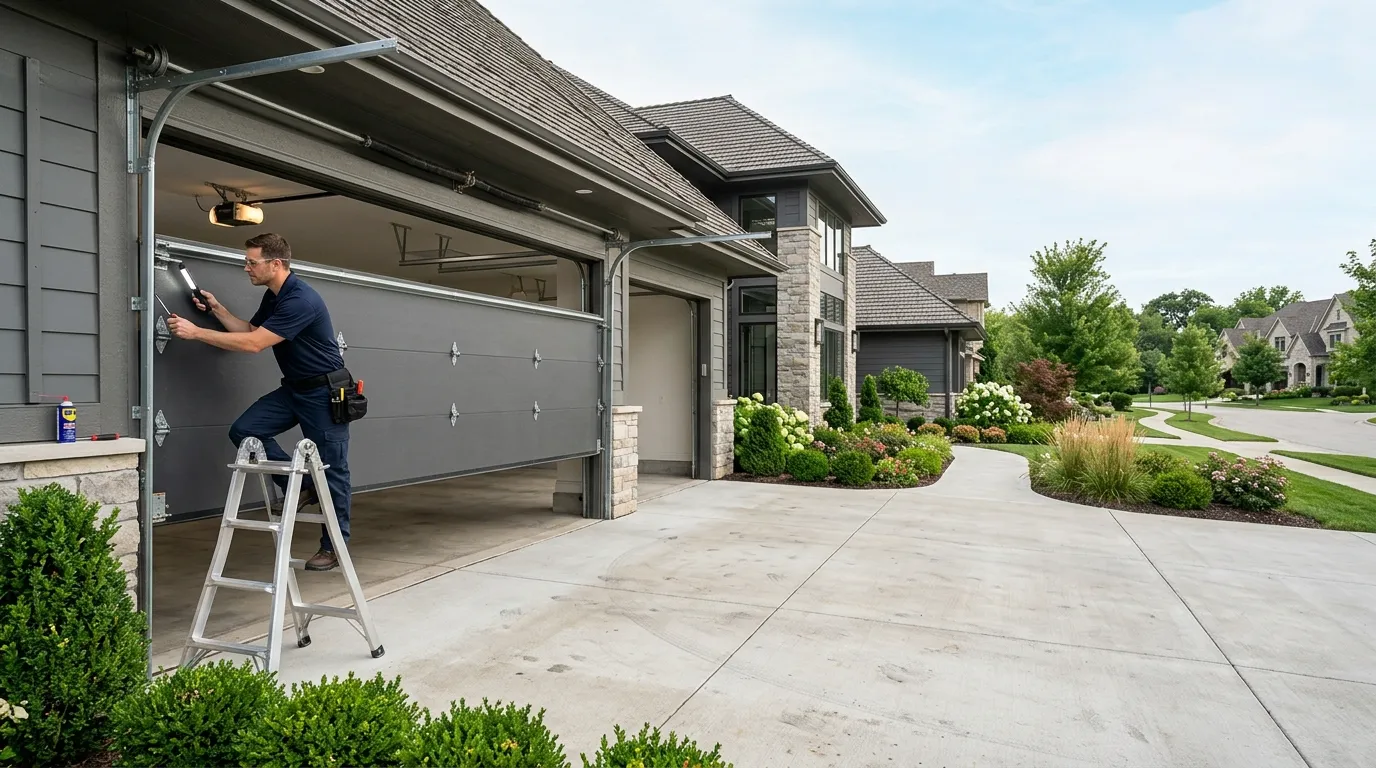
Lubricating hinges, rollers, and the track with a proper garage door lubricant is a job any homeowner can do twice a year, and it genuinely extends the life of hardware that's already older than most people's cars.

Safe homeowner bolt tightening

Tightening loose lag bolts on the track brackets and checking that the auto-reverse safety feature still trips when it should - those are fine to handle yourself too. What we don't recommend touching yourself is anything involving the torsion spring or the cables under tension.

Spring failure risk awareness

On a door this age, the spring may already be near the end of its rated cycle count, and a spring that lets go while you're working on it can break bones.

Disguised spring failure dangers

We also don't recommend regreasing worn galvanized springs from the 1960s-70s building era as a substitute for replacement - grease masks the sound of a spring that's about to fail, it doesn't fix it. If your door is groaning or sagging on one side, that's a call, not a project.

On the truck

Parts We Carry

Because so much of the housing in this part of the service area dates to the 1960s and 70s, we stock torsion springs sized for the shorter, lighter steel doors that were standard then, not just the heavier insulated doors builders install now. We also carry replacement rollers and hinges that match the older track gauge, since a mismatched roller on an old track will bind and wear the track edge faster.

We're upfront that we don't stock every obsolete part. If a door still has its original wood jamb hardware or a discontinued opener model, we may need to order a piece rather than have it on the truck, and that can add a day or two. We'll tell you that on the spot rather than let you assume it's same-visit.

Parts We Carry
How We Fix It

Our process

How We Fix It

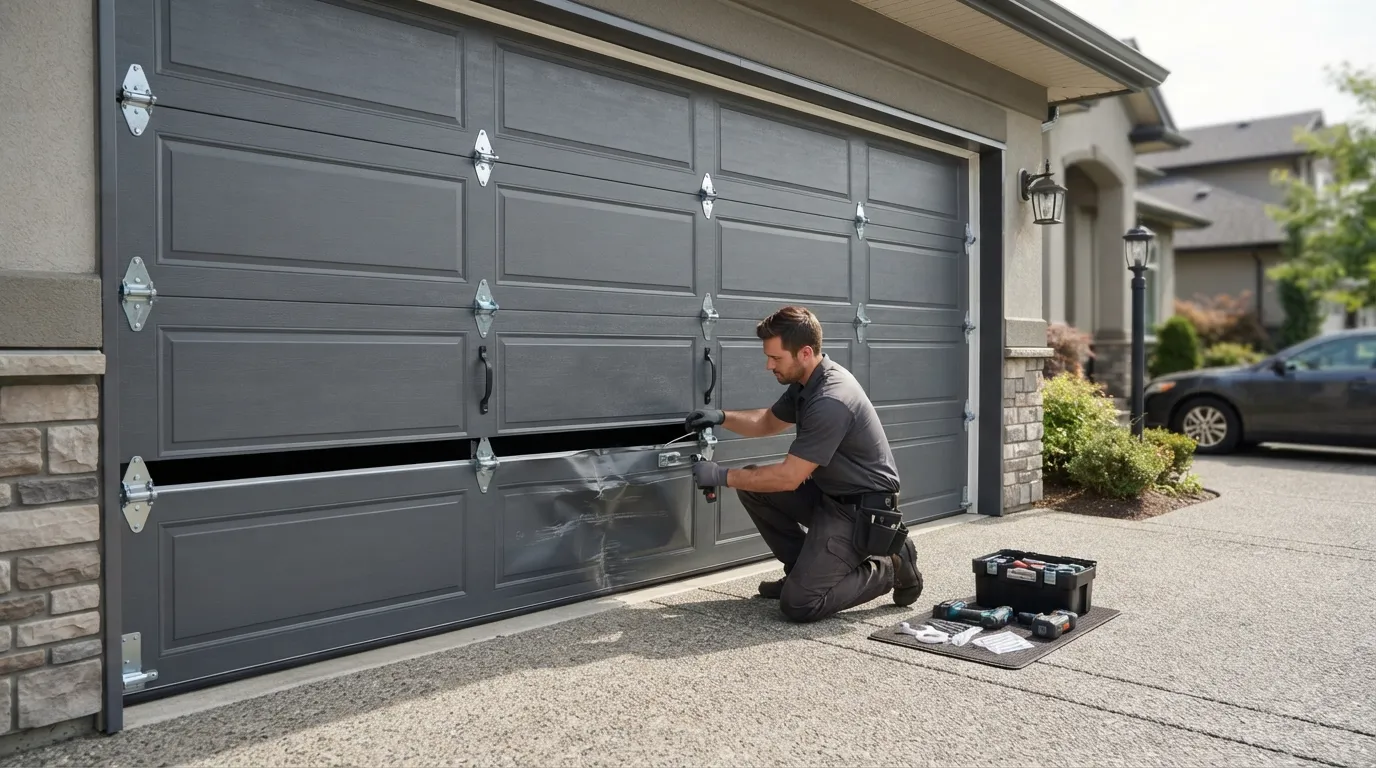
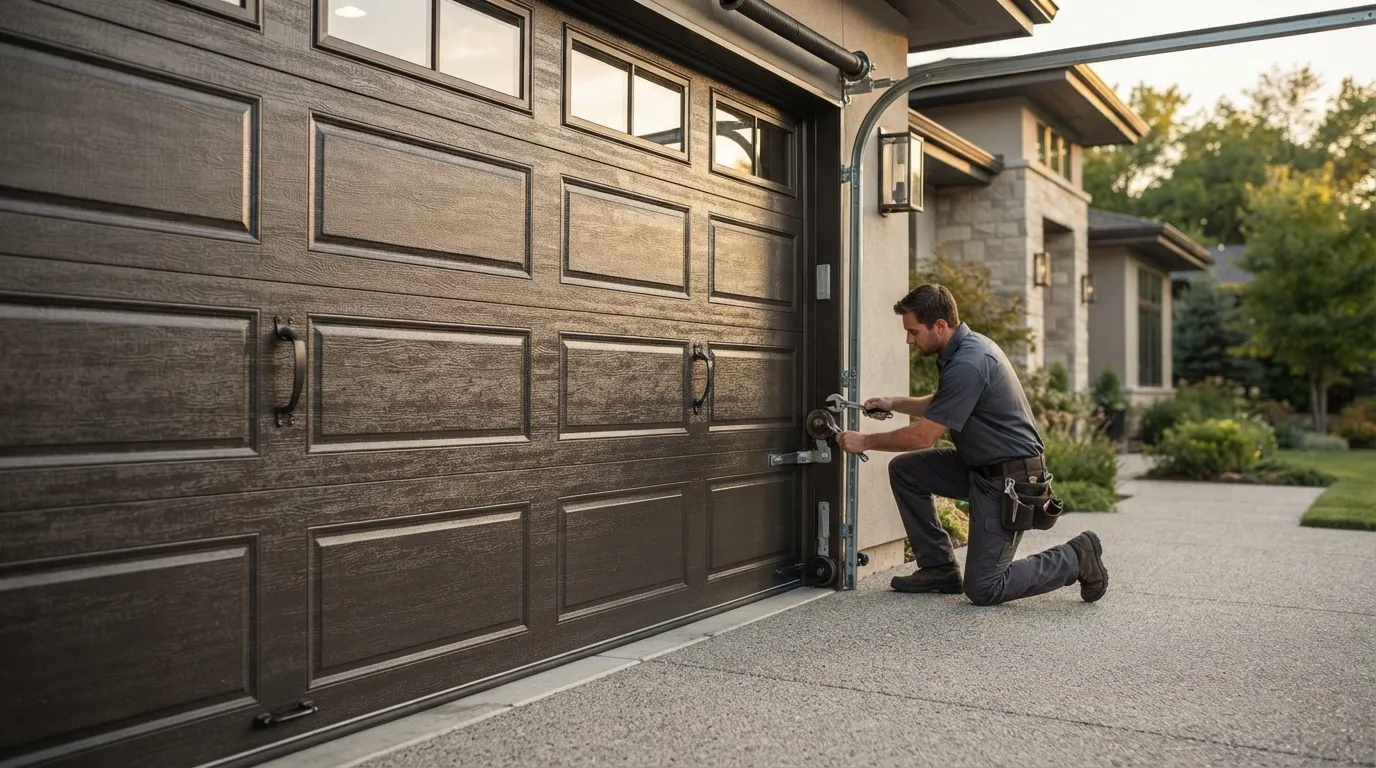
A standard maintenance visit starts with checking spring tension and balance - on a door this age, that's often where the wear shows up first, long before the opener or the panels. We inspect cable fraying at the drum, check the bottom brackets for rust from years of winter road salt tracked in, and test the auto-reverse and force settings, since those get knocked out of adjustment as springs weaken and the opener has to work harder to compensate.

We adjust track alignment where decades of settling have pulled it slightly out of square, and we replace worn rollers before they chip the track. If the spring is close to its cycle limit, we'll say so and quote the replacement rather than patch around it - on a door built in the 1963 era, that's usually a matter of when, not if. We travel out from Vienna for these visits, so we try to bundle the inspection and any needed part into one trip when we can.

Questions

Common questions

How old is the garage door hardware likely to be on a Fort Hunt house?

Most homes in this part of the service area were built around 1963, so if the door hasn't been replaced, the torsion spring, track, and bearings could be original or close to it. That's well past the normal service life for a torsion spring, which is why balance and cable checks matter more here than on newer construction.

Do you have a branch in Fort Hunt?

No. We're based in Vienna, about 16 miles away, and we schedule Fort Hunt maintenance visits on our route rather than out of a local depot. We'll tell you honestly if a part needs to be ordered ahead of the visit.

Should I just replace an old spring myself to save the trip?

We'd rather you didn't. A torsion spring under tension can cause serious injury if it releases while you're working on it, and on a door from the 1960s-70s building era, the spring may be near end of life without obvious warning. It's one of the few jobs where the call is worth it.

How often should maintenance happen given the cold winters here?

Twice a year is reasonable for lubrication and a visual check, since the service area sits in a cold-climate band and thermal swings speed up wear on springs and hinges. If your door is original to a 1960s build, a professional balance and cable check on top of that is worth scheduling before winter.

Ready when you are

Need a garage door sorted in Vienna?

Vienna Garage Door Pros repairs and installs garage doors, springs and openers in Vienna, VA and the surrounding area.

Call NowGet a quote