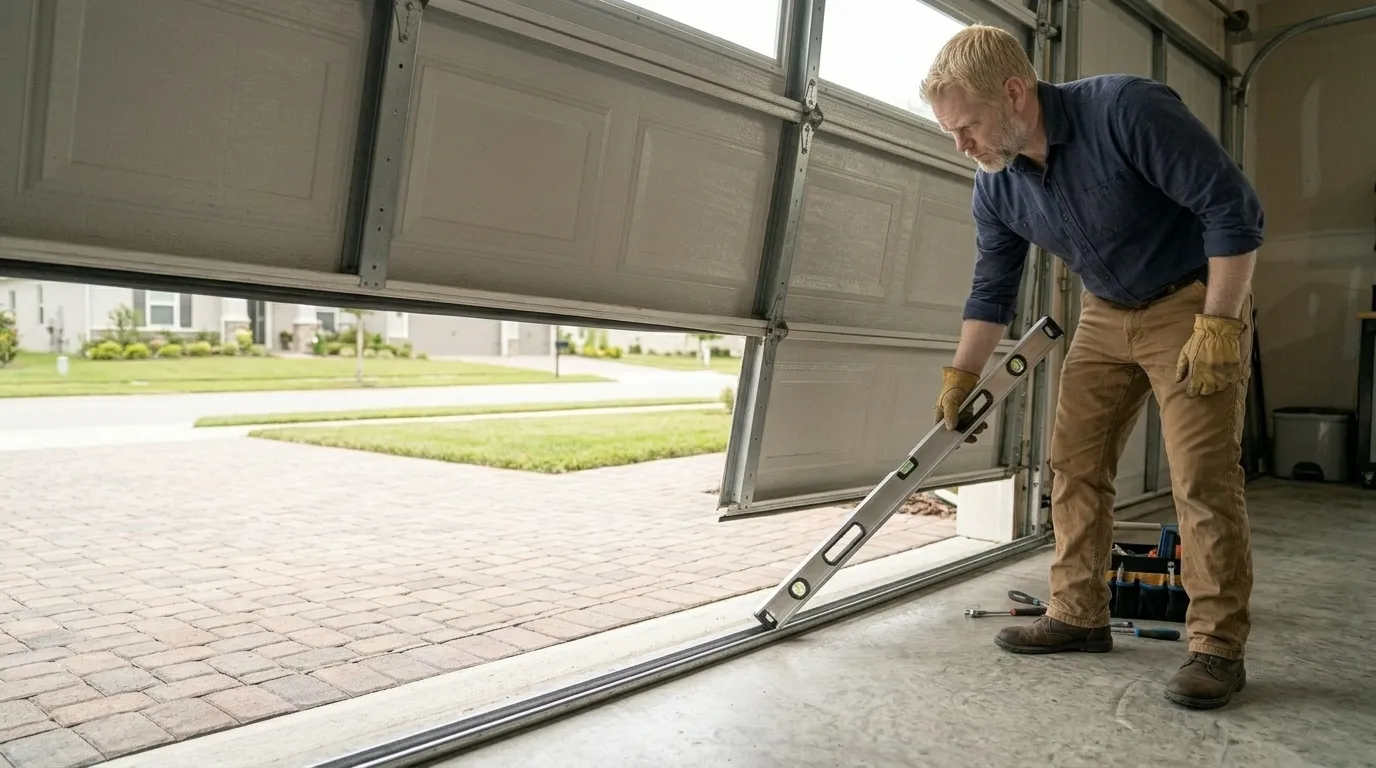
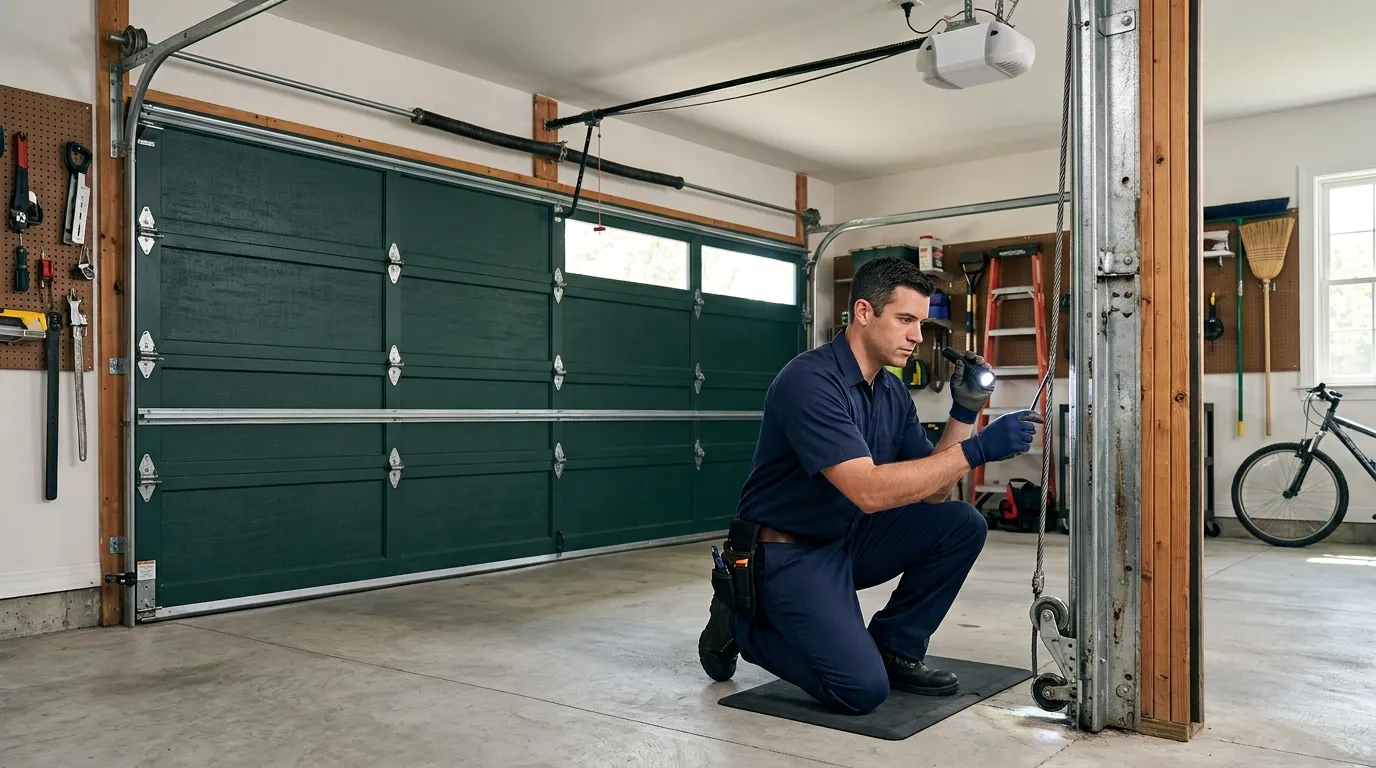
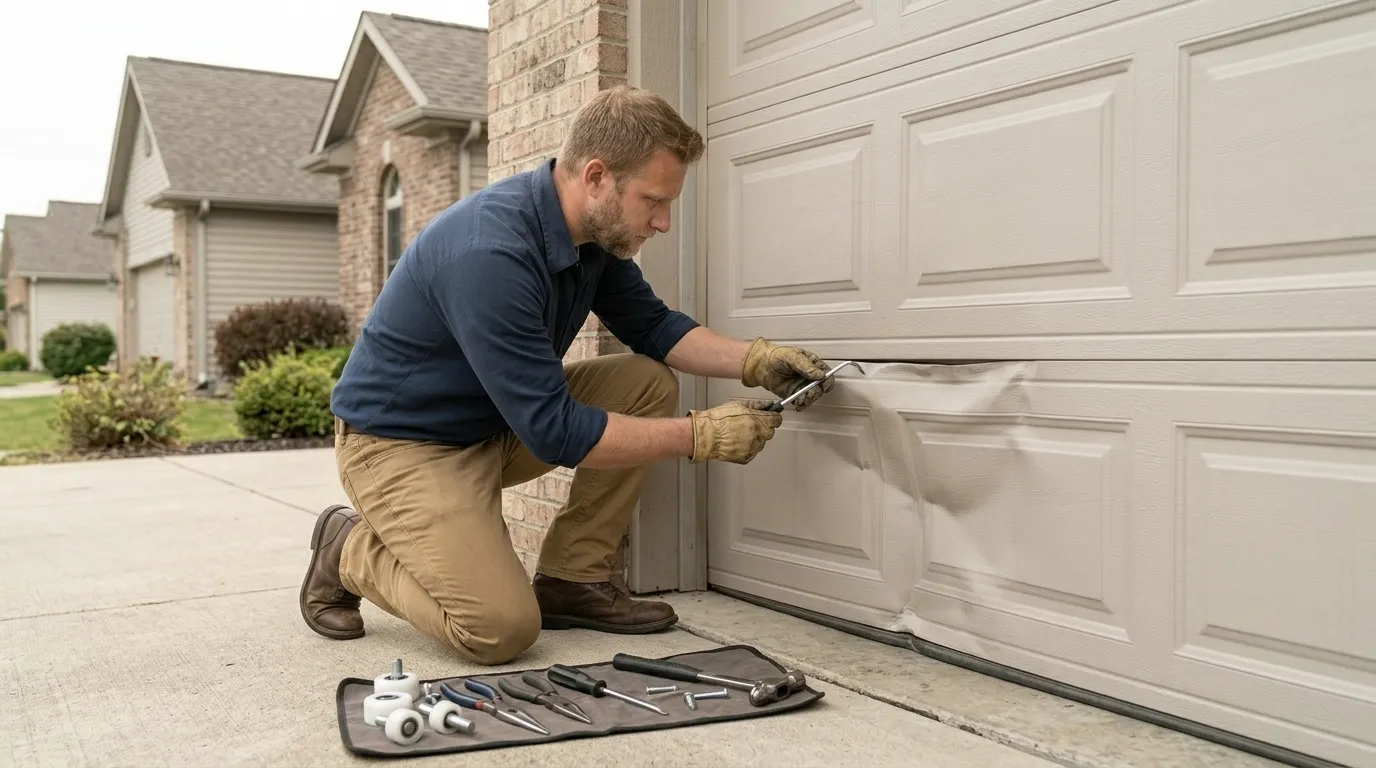
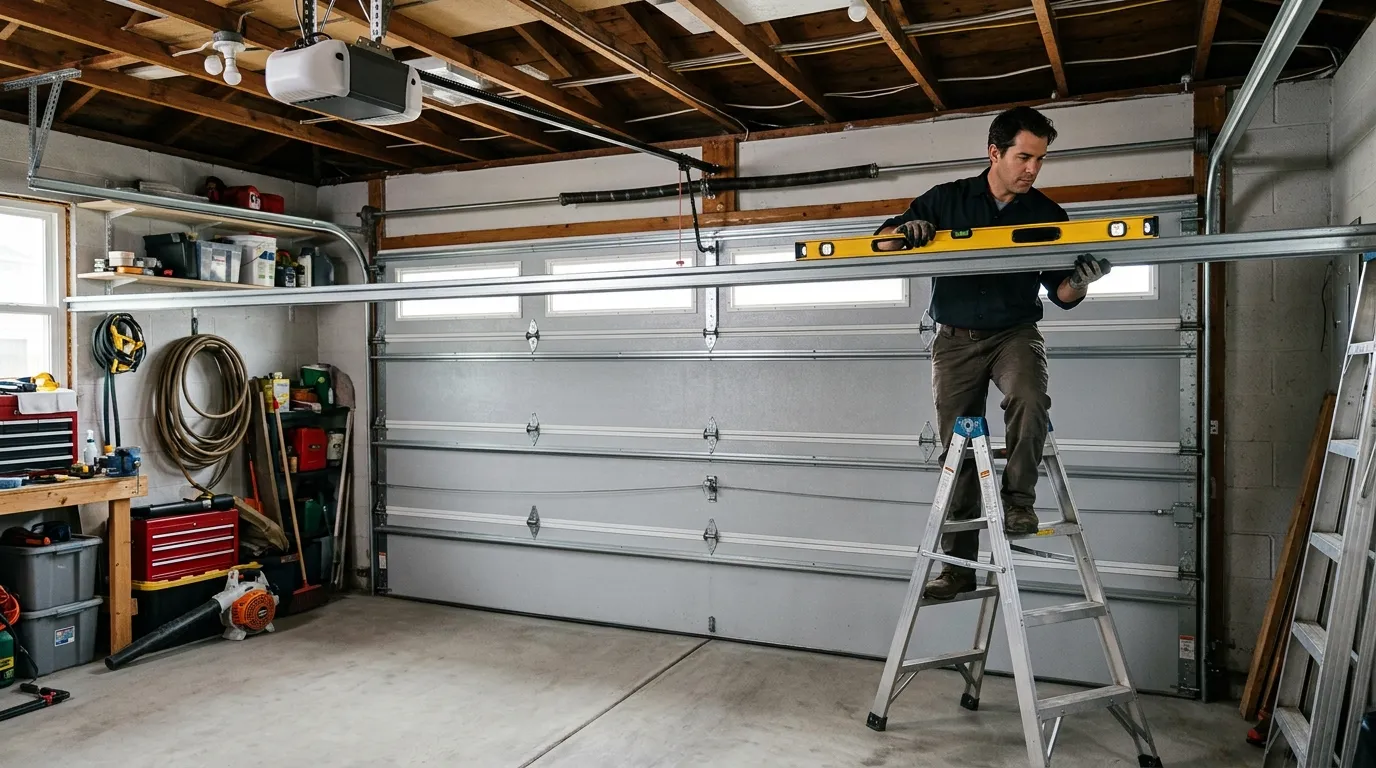
A door that's jumped its track isn't random. In this service area, most houses were built between 1940 and 2015, with the median landing around 1977, and a heavy concentration of stock from the 1960s and '70s spread across two dozen named neighborhoods from Dunn Loring to North Springfield. Doors and track hardware from that era were rolled steel, hung on brackets that were never meant to last fifty winters. Add a cold-climate band with real freeze-thaw cycles, and you get slab movement under the track brackets, rollers that have worn thin plastic tires down to the axle, and lag screws that have backed out of framing that's shrunk a hair since Nixon was in office. One hard slam, one kid riding a bike into the door, one panel that's already bowed from age, and the roller pops the track. It's not that the door failed. It's that the hardware holding the track true was already at the end of its service life before the failure showed up.
We see this most on original single-panel or early sectional doors that were never upgraded when the springs or opener were replaced later. The track survived two or three other repairs because nobody looked at it. That's the pattern across this area's older blocks, not a one-house problem.