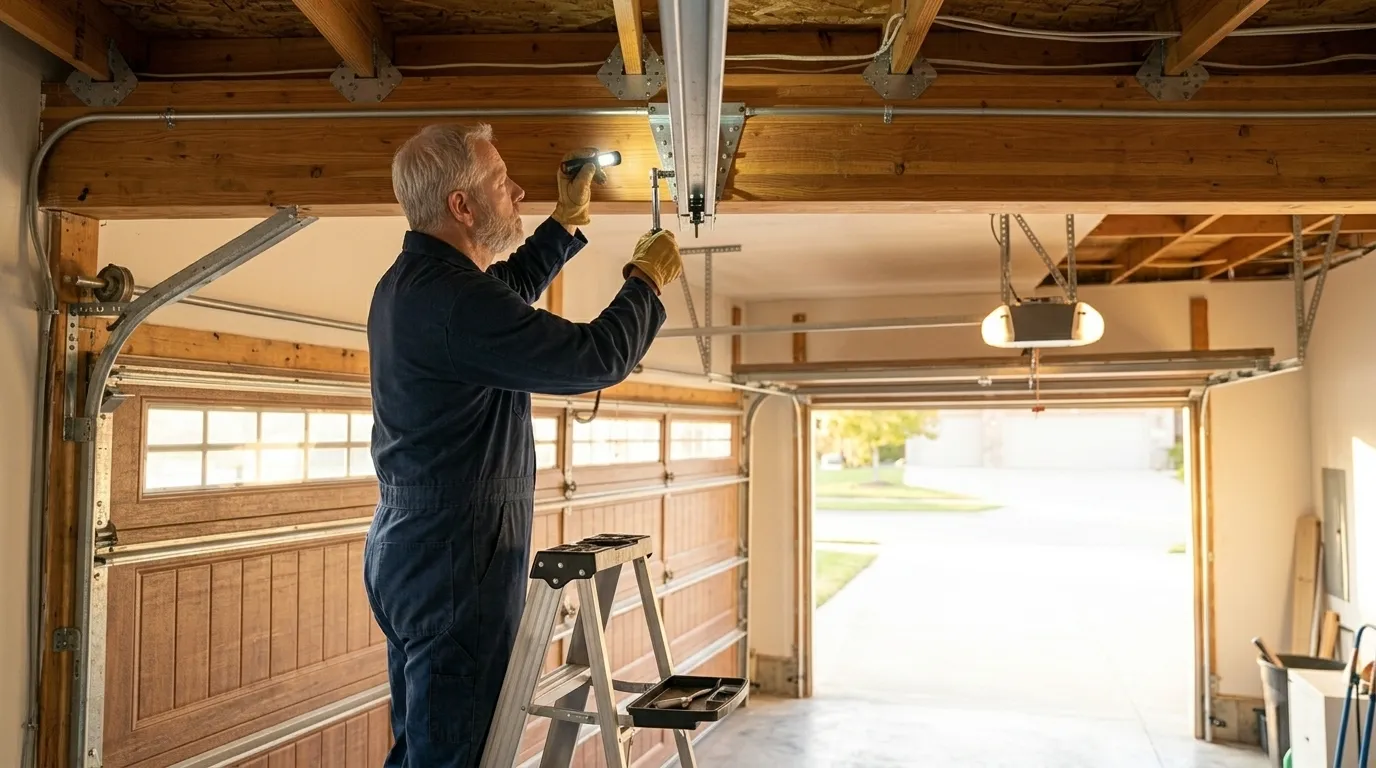
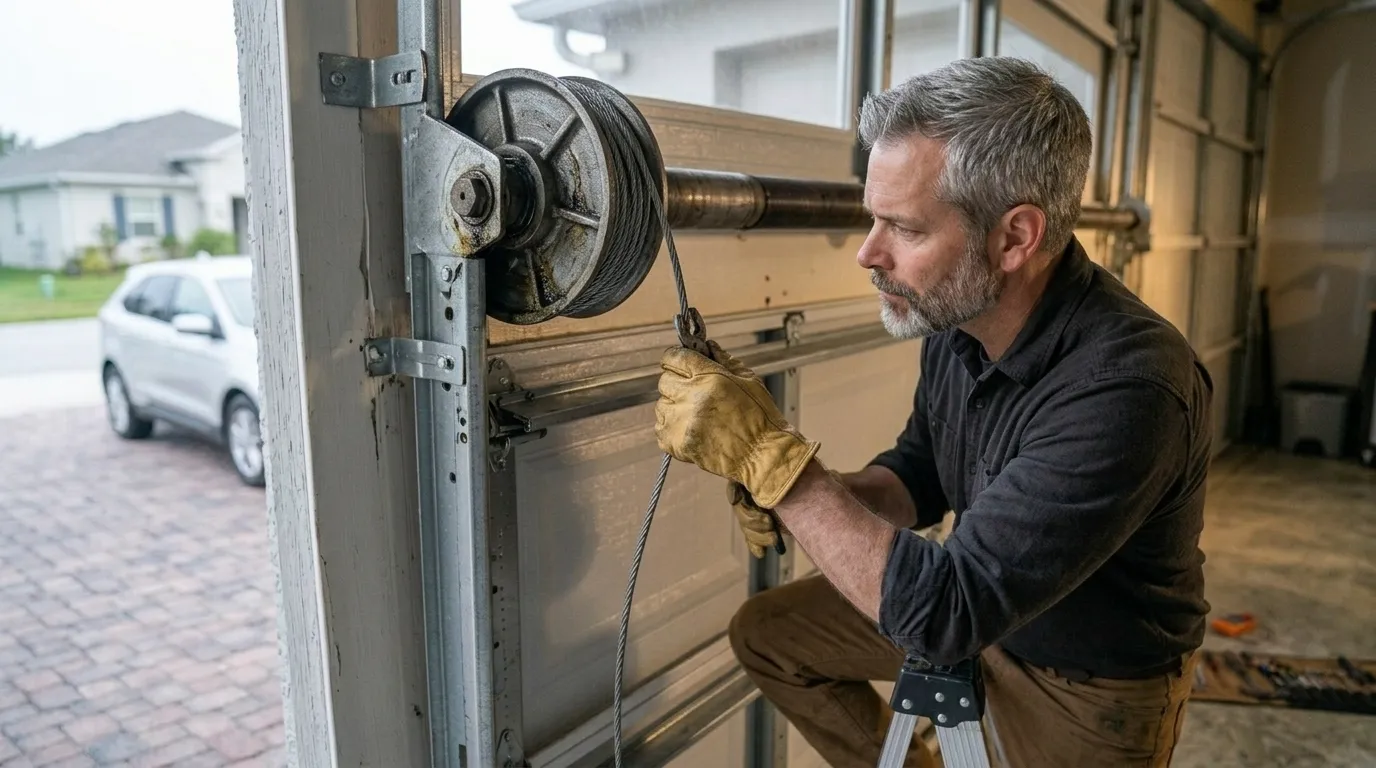
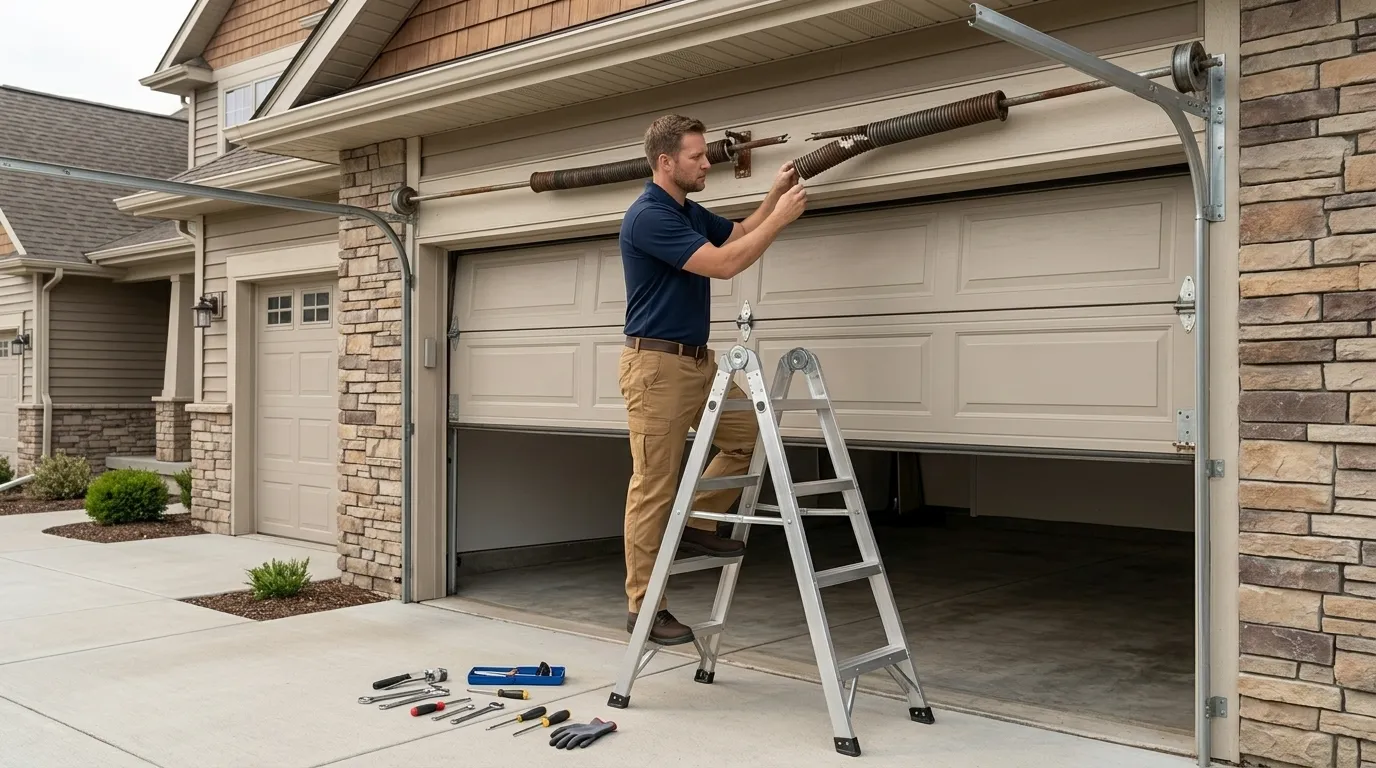
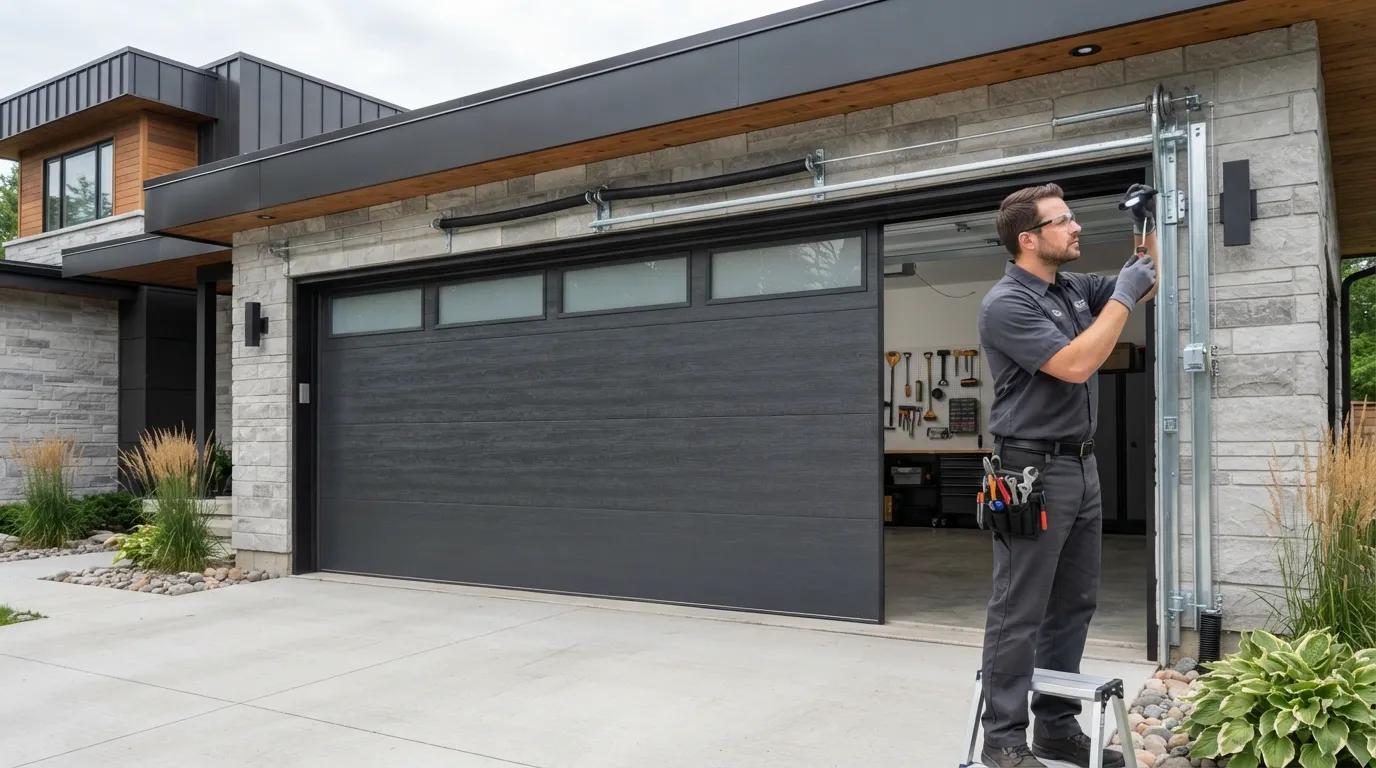
A house with a 1967 median build year has usually been through one or two garage doors already, but the original torsion hardware often survives underneath a newer door skin - springs sized for a lighter, thinner panel than what's sold now. When someone swaps in a heavier insulated door without upgrading the spring, the opener strains and the cable wears faster than it should. That's a Mount Vernon-specific mismatch, not a universal one; newer subdivisions elsewhere in our coverage area don't have it as often.
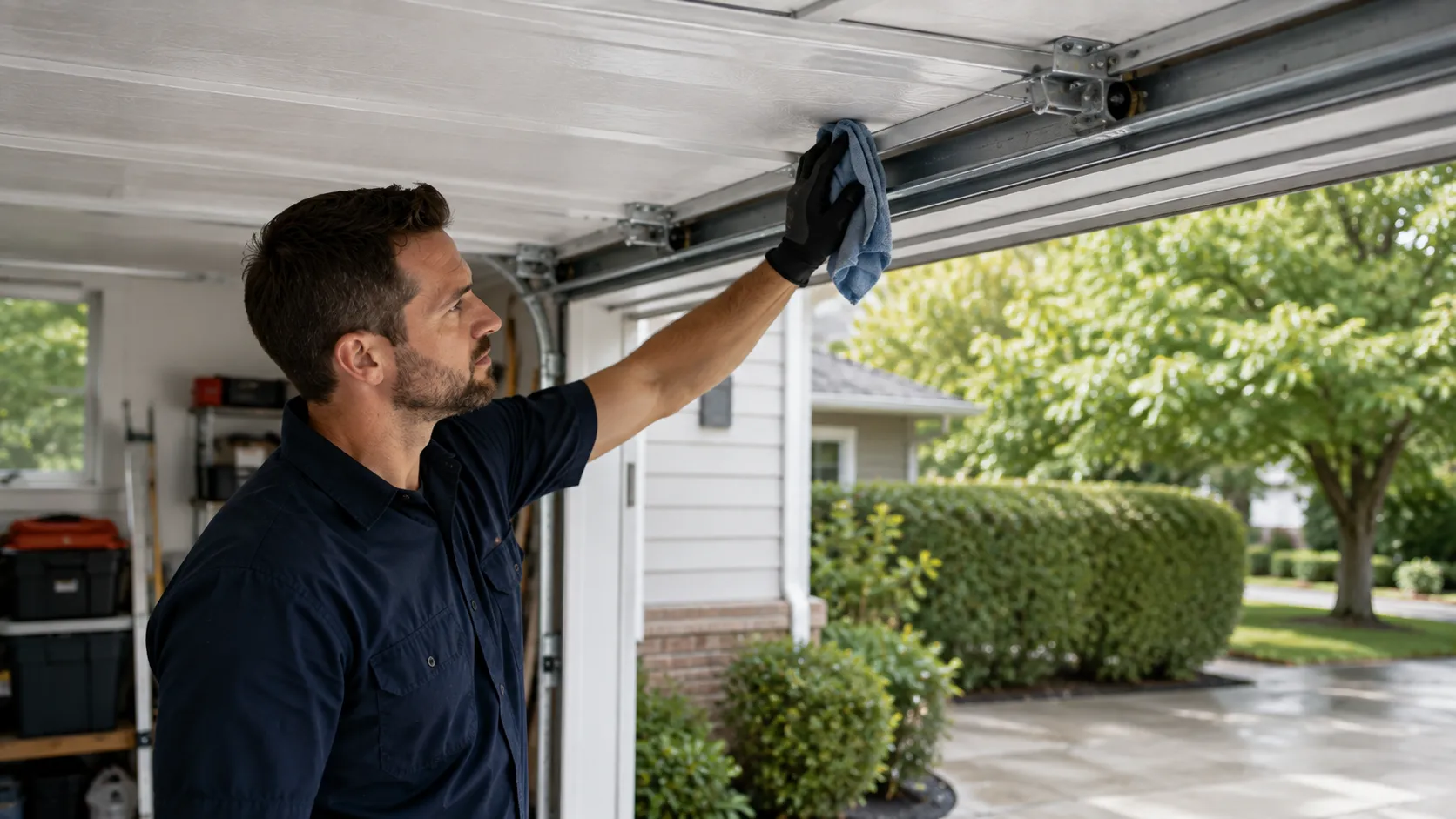
The region's winters are the other factor. Cold, damp air stiffens old lubricant on rollers and hinges that have been in place since the 1960s or 70s, and steel that's flexed through fifty-plus winters develops fatigue points a five-year-old door hasn't reached yet. On a house at this vintage, we look first at the torsion spring gauge, the roller condition, and whether the track was ever re-shimmed after a settling foundation - common in homes this age.
We're not going to pretend every failure traces back to the house's age. Openers fail from motor wear regardless of when the door went in, and a remote that stops working is usually just a battery. But the springs and cables carrying a door built to a 1967 opening size - often narrower than modern double-door spans - are the pattern we see most in this part of the service area.