
Cascade damage binding and opener
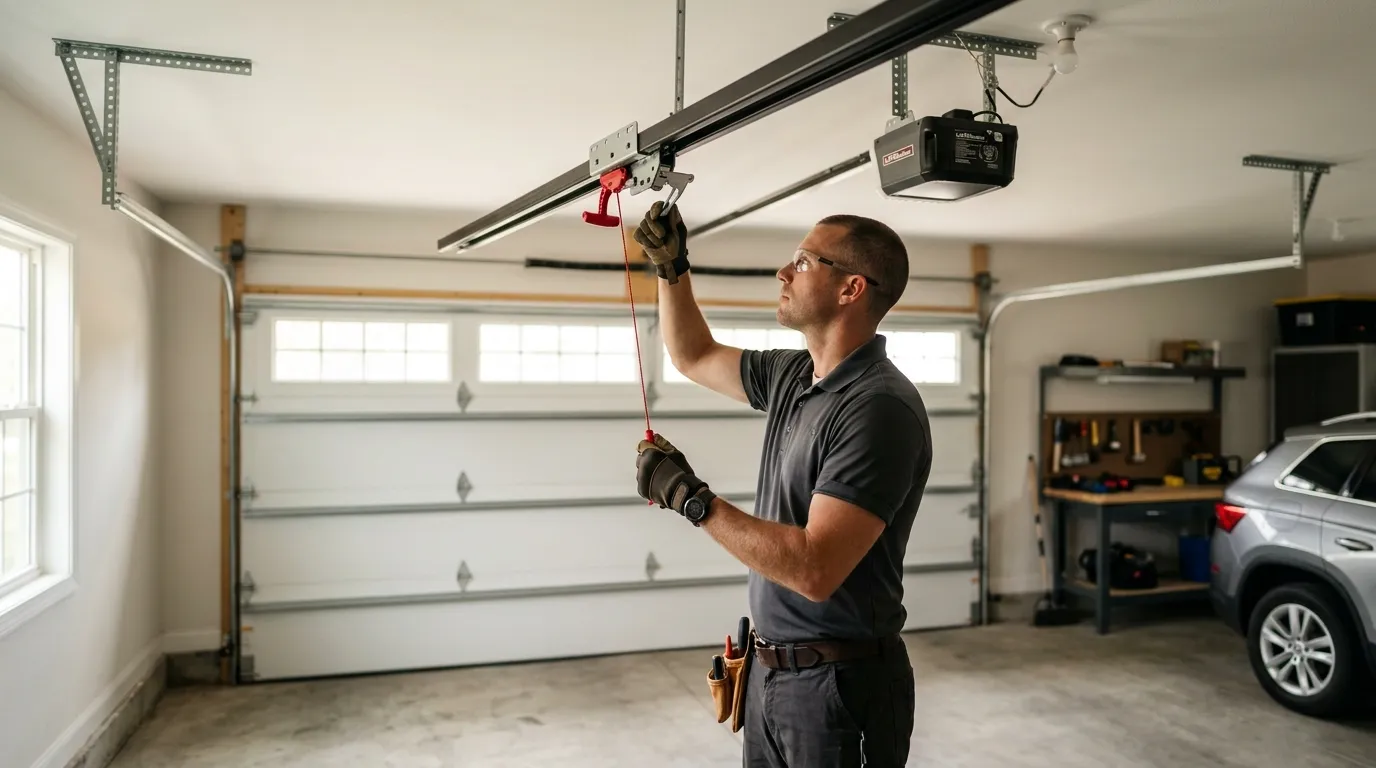
Left running on a bad track, the door can bind, the opener can burn out trying to force it, and the cables can jump their sheaves, which turns a repair job into a full track-and-hardware replacement.
Fairfax Station, Vienna
Off-track garage door repair for Fairfax Station homes built mostly in the early 1980s, served by the Vienna crew that makes the 8-mile drive out.
Popular Services
On the truck
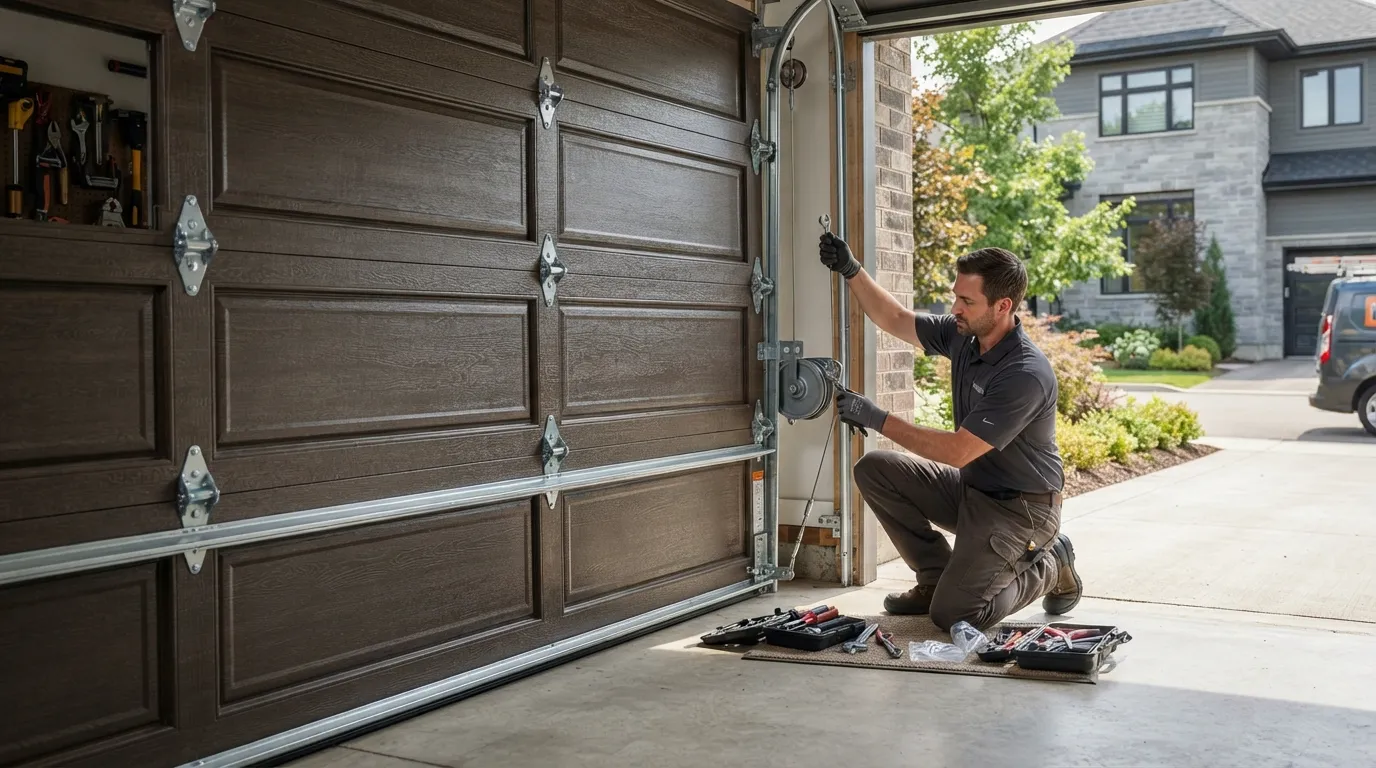
The truck that comes out to Fairfax Station carries the rollers, track brackets, and cable clips that fit doors from the early-1980s wave of building here - nylon rollers on steel stems, galvanized track sections in the standard widths, and the sheave and cable sets that go with them. Fairfax Station's housing stock centers on 1982, a decade or so newer than the 1977 median across the wider service area, so we're rarely chasing the oddball hardware you find on a house built in the 1950s. That's a small mercy on a call like this: the part that failed is usually still made, still stocked, and not a special order. We don't carry every obscure aftermarket bracket a prior owner might have bolted on, and if your door has one of those, we may need a day to source it rather than fix it on the spot. Better to say that now than to promise a same-visit fix and miss it.
Warning signs
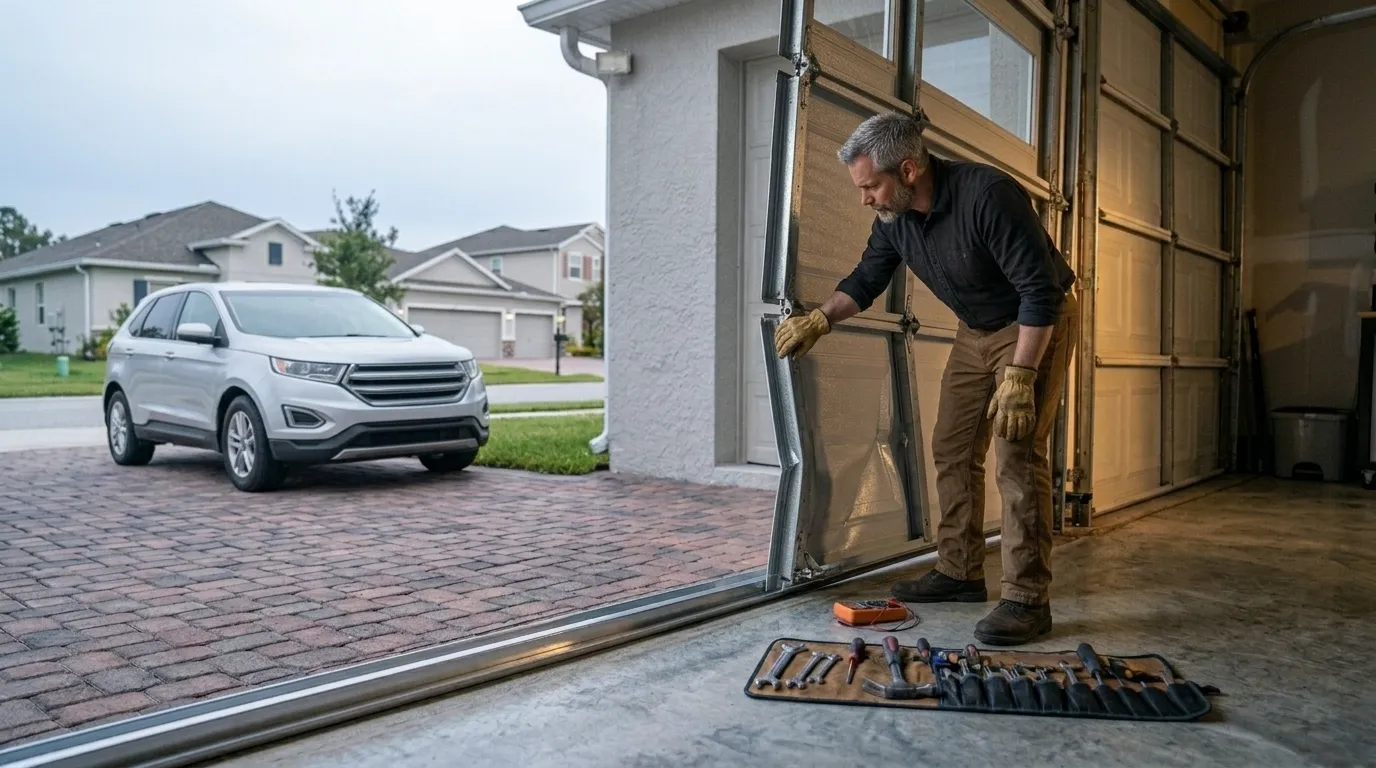
A door that's off its track usually shows itself one of two ways: it hangs crooked, cocked at an angle with one side higher than the other, or it's stopped moving altogether and the opener is straining against something that won't budge. Sometimes a roller has jumped the track and you can see the gap where it should be riding inside the rail. Sometimes the track itself has pulled away from the wall bracket - more common on doors that have taken a hit, or where the bracket screws have worked loose over the years. Either way, the door is no longer following the path it's built to follow, and forcing the opener to keep trying is how a bent track becomes a track that needs replacing instead of adjusting.
Watch-outs
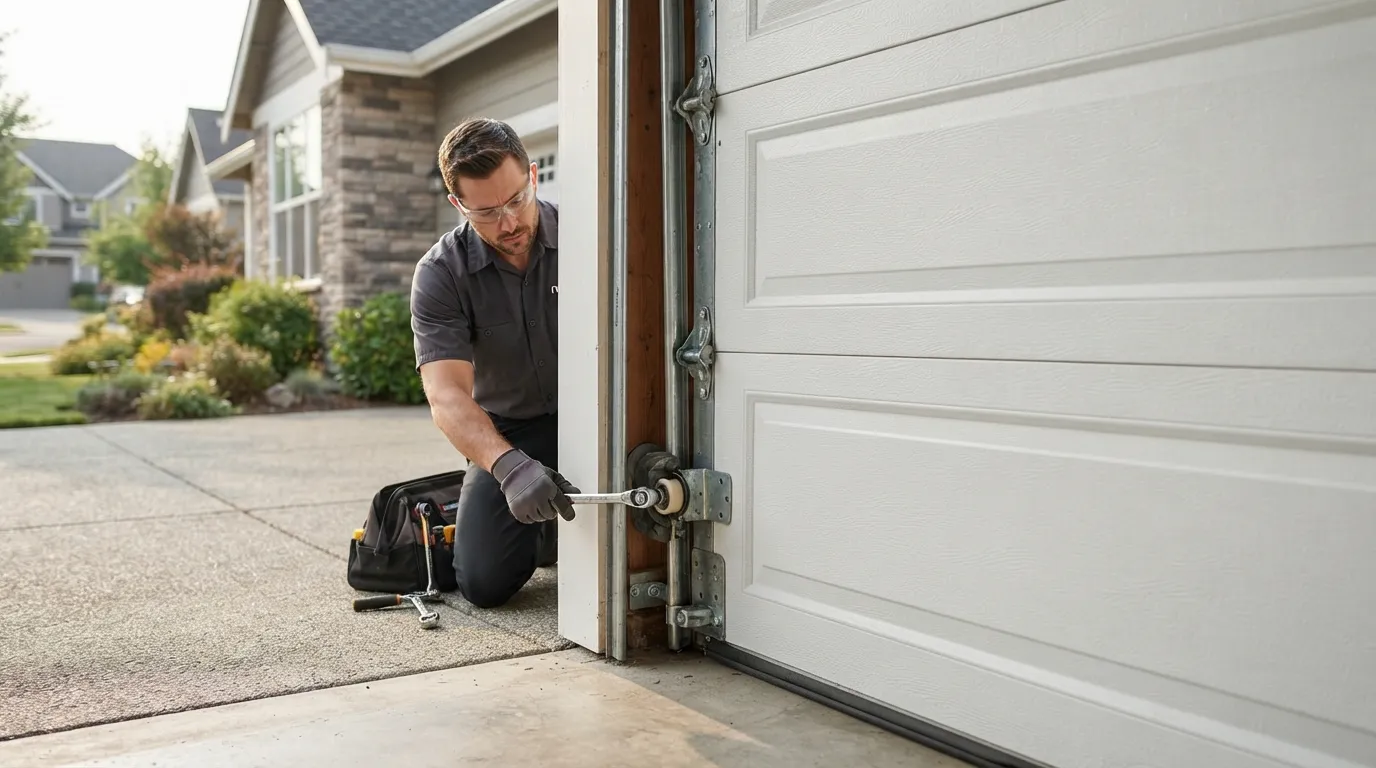
A bent or spread track puts the whole door out of true, and the fix depends entirely on how far it's gone. Caught early - a roller out of the rail, a bracket loose but not broken - it's a straightforward reset: back the roller in, true the track, tighten the hardware.
Left running on a bad track, the door can bind, the opener can burn out trying to force it, and the cables can jump their sheaves, which turns a repair job into a full track-and-hardware replacement.
On a two-car door especially, an off-track panel can also put uneven load on the springs, and if those go next, you're looking at two problems instead of one.
The honest limitation here: once a track is bent badly enough, straightening it rarely holds. At that point replacing the section costs less over time than repeated adjustments that keep slipping.
DIY or pro
If the door is only partway off - a roller out, but the panel still sitting mostly square - you can sometimes walk it back in by hand with the opener disconnected. Beyond that, we'd tell you to stop. A door under spring tension that's also off-track is unpredictable weight: it can drop, swing, or come off the wall bracket entirely while you're working under it. We're not going to tell you every job needs a truck, but this is one where the failure mode - a loaded door falling on someone reaching for a bracket - isn't worth the savings. If the door won't move freely by hand within a minute or two, leave it and make the call.
Job timing
Most off-track calls in Fairfax Station run short - a roller reset or bracket retighten is usually 30 to 60 minutes once the truck's on site.
A bent track section that needs replacing takes longer, since it means pulling the old rail, cutting or fitting new track to the opening, and rehanging the door true.
Because the drive out from Vienna covers roughly 8 miles, we build that travel into the window we give you rather than treating it as incidental - it's part of why we ask what you're seeing before we head out, so the right parts are on the truck the first time instead of a second trip.
Local causes
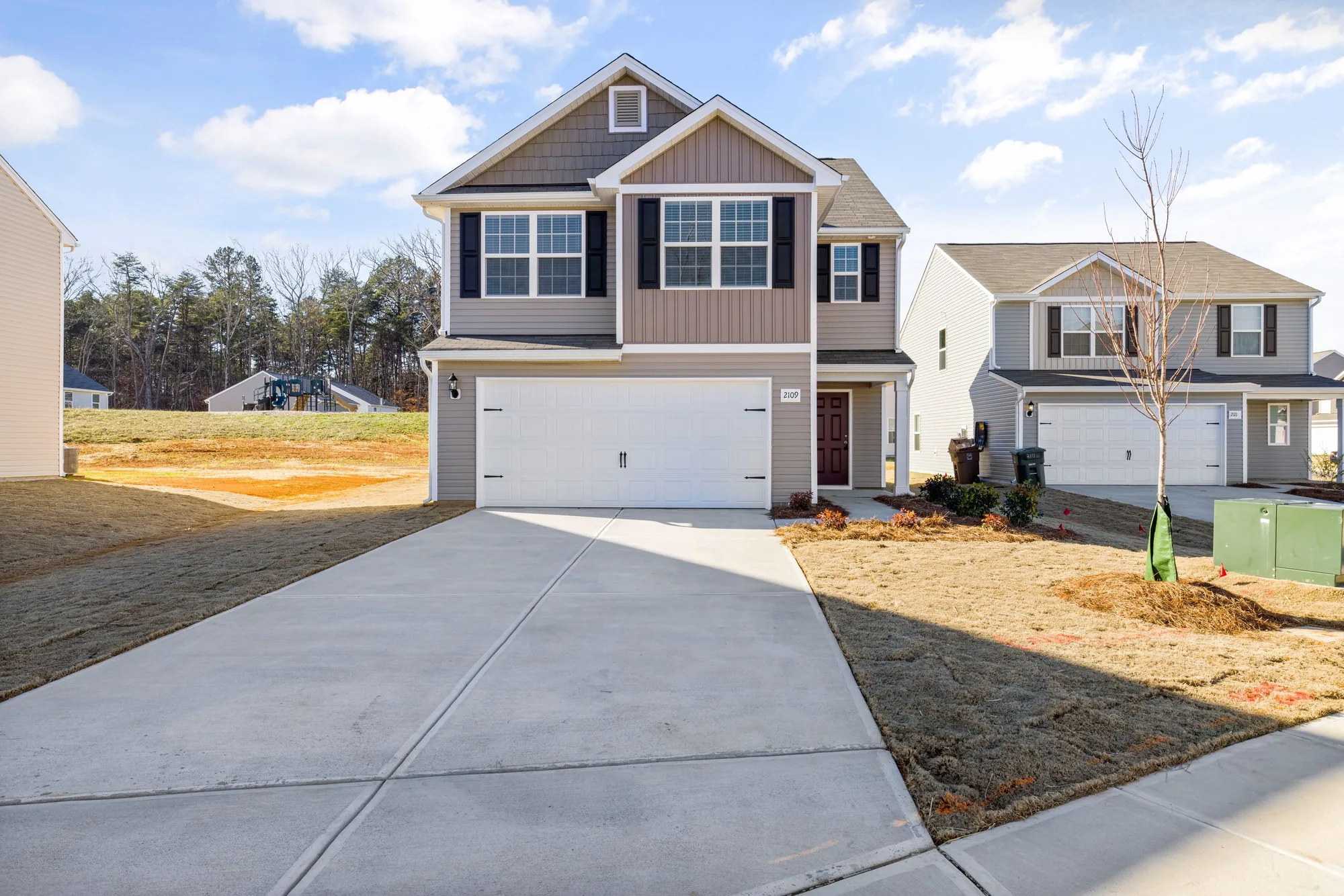
Fairfax Station's homes cluster around a 1982 build year, which puts most doors here on original or first-generation replacement track - steel rail that's now been through four decades of seasonal swing. The service area sees a cold climate with real winter severity, and track brackets anchored into wood framing loosen with the seasonal contraction that comes with that kind of cold. Add in that household incomes here run well above the area-wide median of $150,707 - Fairfax Station households average closer to $212,128 - and what we see more often is bigger, heavier doors: wider two-car openings and insulated panels, which put more strain on the same track hardware than the lighter single doors common on older streets. Bigger door, older bracket, same freeze-thaw cycle - that combination is what brings a track out of true here.
Questions
Not always. If the door is stuck but not straining against the opener, it can usually wait a day. If the opener is still trying to force it, or the door is hanging visibly crooked, turn the opener off at the wall and stop using it until someone looks at it - running it further usually makes the fix bigger.
A 1982-era house doesn't mean a 1982-era door - plenty have been replaced since. But the track and wall brackets often stay original longer than the door panel itself, and those brackets working loose in wood framing over cold winters is a common cause even on a newer door.
For the hardware common to homes built in the early 1980s, yes - that's most of what we see out this way. If a previous repair added an unusual bracket or track width, we may need to order that piece rather than fix it the same visit.
Explore more
Ready when you are
Vienna Garage Door Pros repairs and installs garage doors, springs and openers in Vienna, VA and the surrounding area.