
Uninsulated door era hardware
Those doors were rarely insulated, because insulation wasn't the selling point it is today, and forty-plus years on, a lot of that original hardware is still hanging in there, just barely.
Dunn Loring, Vienna
Dunn Loring sits 2 miles from Vienna and its houses, mostly built after 1977, need openers and doors matched correctly to that era, not decades-old parts.
Popular Services
Booking
Dunn Loring is a small pocket of the territory - about 2,822 households packed into a stretch just 2 miles from Vienna. There's no branch office out here; the crew and the truck come from Vienna for every job, which is close enough that a single afternoon usually covers the measurement visit.
Because the area is small and mostly built in one wave, a lot of the openings the crew measures out here turn out to be near-identical sizes, which speeds up the quote once someone's actually looked at the opening.
Booking starts with a call or a form submission, and the next step is always a look at the existing opening in person - photos alone don't tell you enough about header height, track clearance, or what's behind the drywall on a house from this era.
If you want a sense of the other work done in the surrounding area before you call, the Dunn Loring area page has more on what the crew sees around here. For the full run of services offered out of Vienna, including repair and opener work alongside new installs, see the Vienna installation page.
Watch-outs
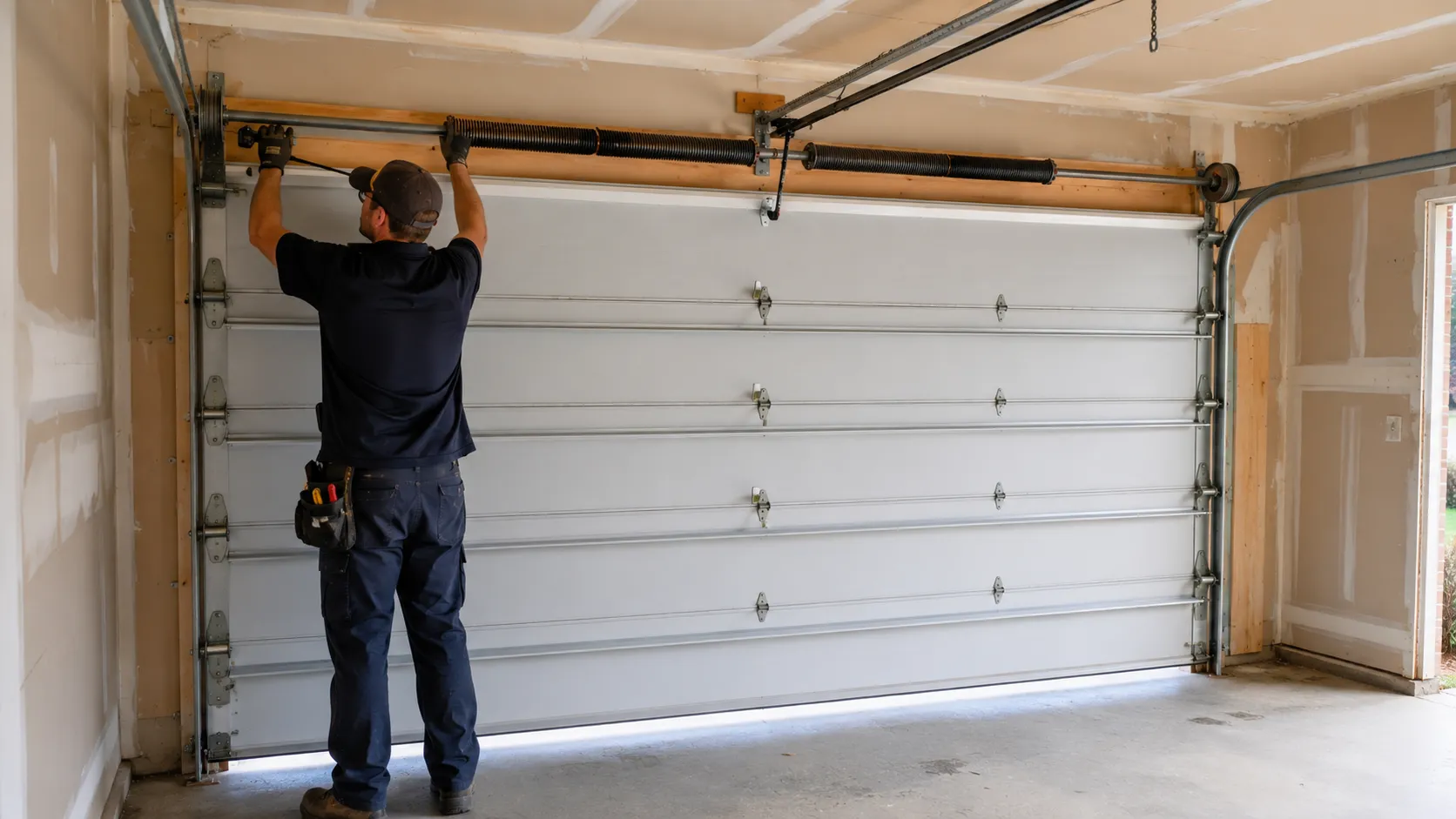
With a median build year of 1977, most Dunn Loring garages started life with builder-grade steel doors on extension springs mounted overhead - not the torsion setup that's standard now.
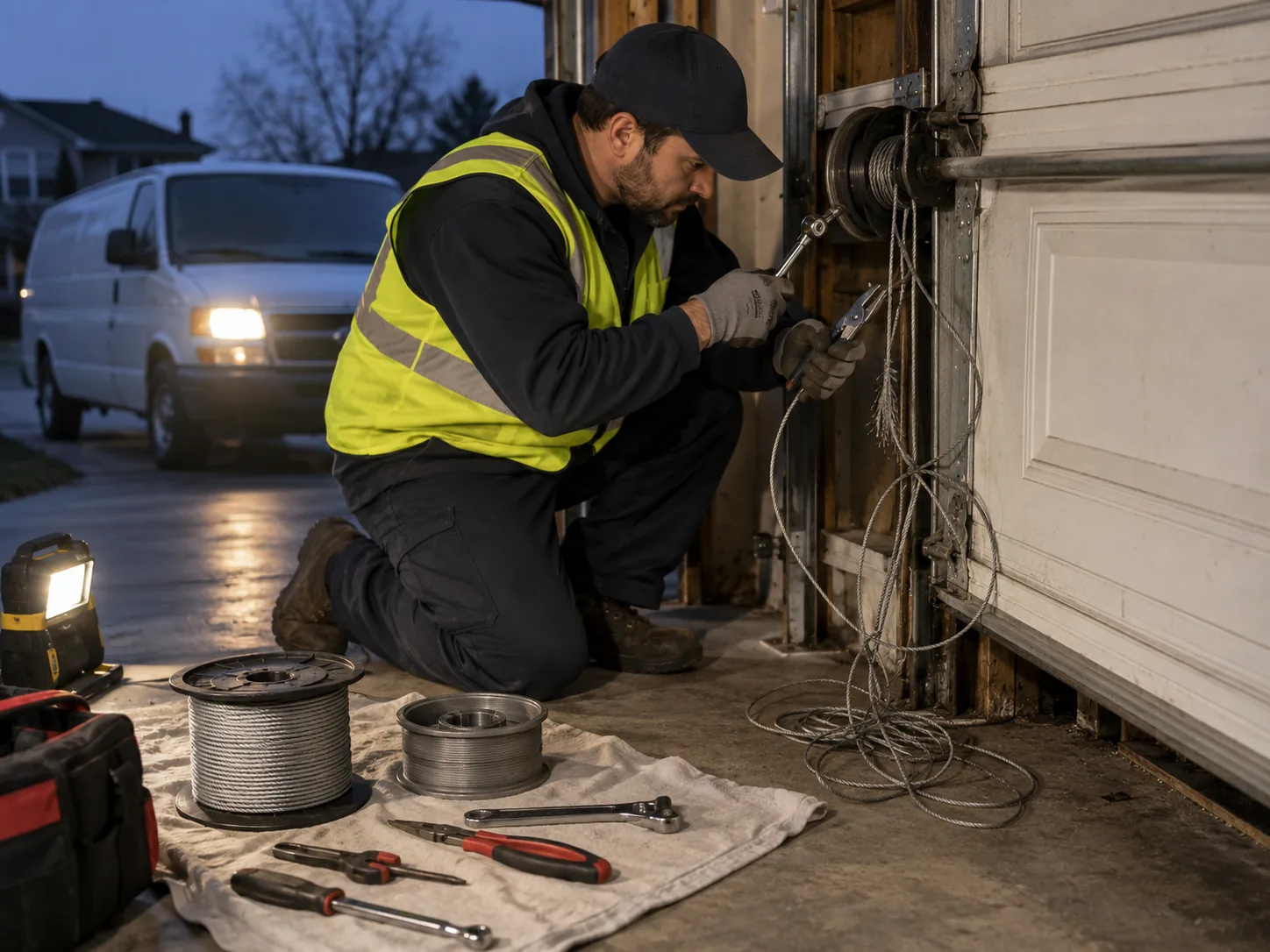
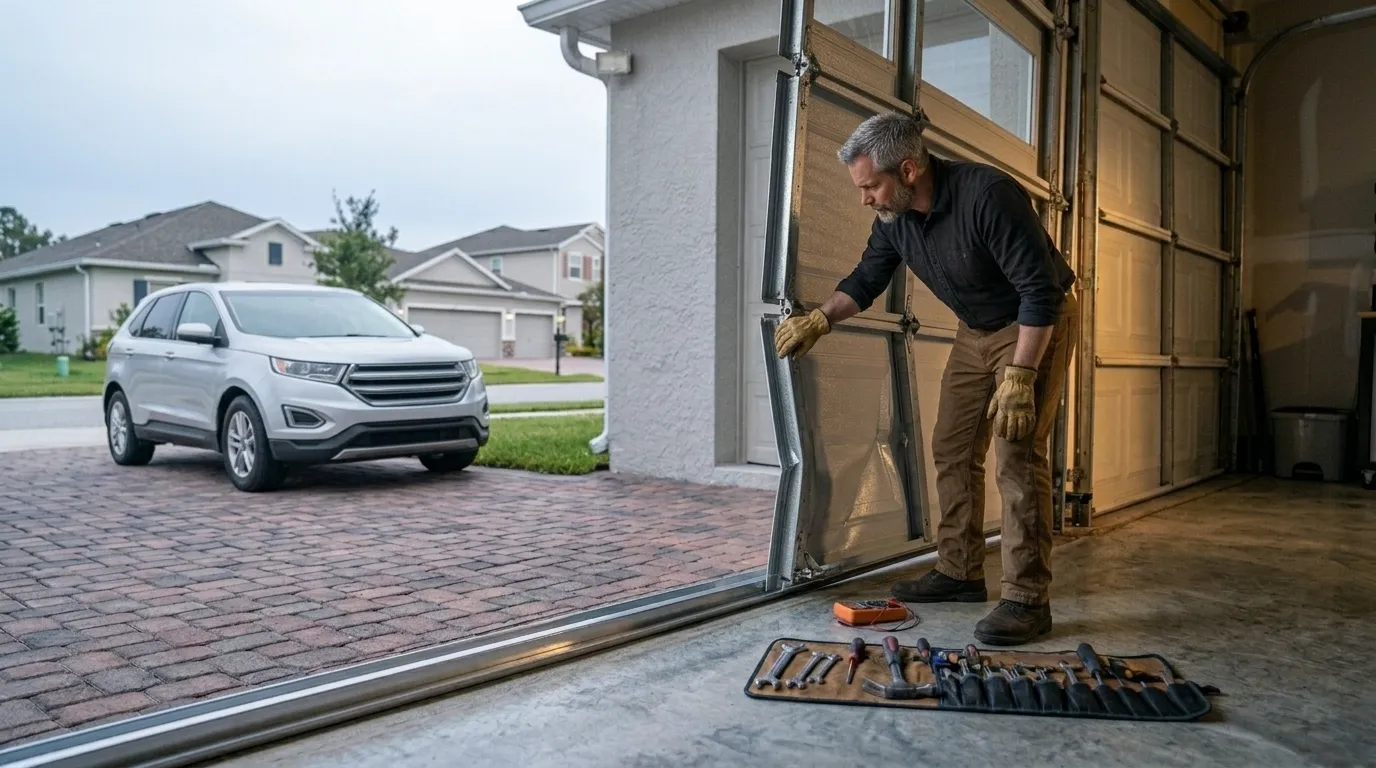
Those doors were rarely insulated, because insulation wasn't the selling point it is today, and forty-plus years on, a lot of that original hardware is still hanging in there, just barely.
The usual failure on a house this age is the door itself giving up before the opener does - rust at the bottom panel, delamination if it was ever a two-layer door, or a frame that's shifted enough that a same-size replacement won't sit square without new jamb work. Original openings from this build era also tend to run standard 8-by-7 or 9-by-7 sizes, which is good news: most new sectional doors fit without carpentry.
The exception is houses that had additions or garage conversions done later, where the opening was resized off-spec and a stock door won't drop in clean. That's the one case where we tell a homeowner up front that the door itself is the easy part - the framing is where the job gets long.
Pricing
Median household income in Dunn Loring runs to $236,563, well above the $150,707 median across the wider service area, and it shows up in what people choose here - more insulated doors with glass-panel inserts, fewer bare four-panel steel jobs bought purely on price. That doesn't mean every job here is a premium door; plenty of homeowners still want a plain steel door done right and nothing more.
What actually moves the number on any given job is size, insulation value, window inserts, and whether the opener gets replaced at the same time or left alone. A single door costs less than a double, and a double with glass and full insulation costs more than either. We don't have a flat number to quote you here - every job gets priced against the actual opening and the actual door picked, not a menu rate - but we'll tell you plainly if a cheaper option gets you 90% of the result for less money, because that's usually true on a garage that isn't heated.
Job timing
A straightforward single-door swap - same size opening, same track position, no header rot - is typically a one-day job from tear-out to a working door and opener.
Doubles take longer, mostly because there's twice the panel to hang and align, and any door with side-mounted torsion springs on an older track takes extra time to convert cleanly. What slows a job down out here isn't distance - 2 miles is a short drive - it's what's behind the old door once it comes off.
Houses built the same decade as most of Dunn Loring's stock sometimes have jamb wood that's gone soft at the base, or a header that was never quite square to begin with, and that adds time that has nothing to do with the new door itself.
We'll flag that kind of thing at the measurement visit, not after the old door's already off the wall, so there aren't surprises mid-job. One honest limit: if the opening needs real framing repair, that's carpentry, not garage door work, and we'll say so rather than try to force a door to fit.
Our process
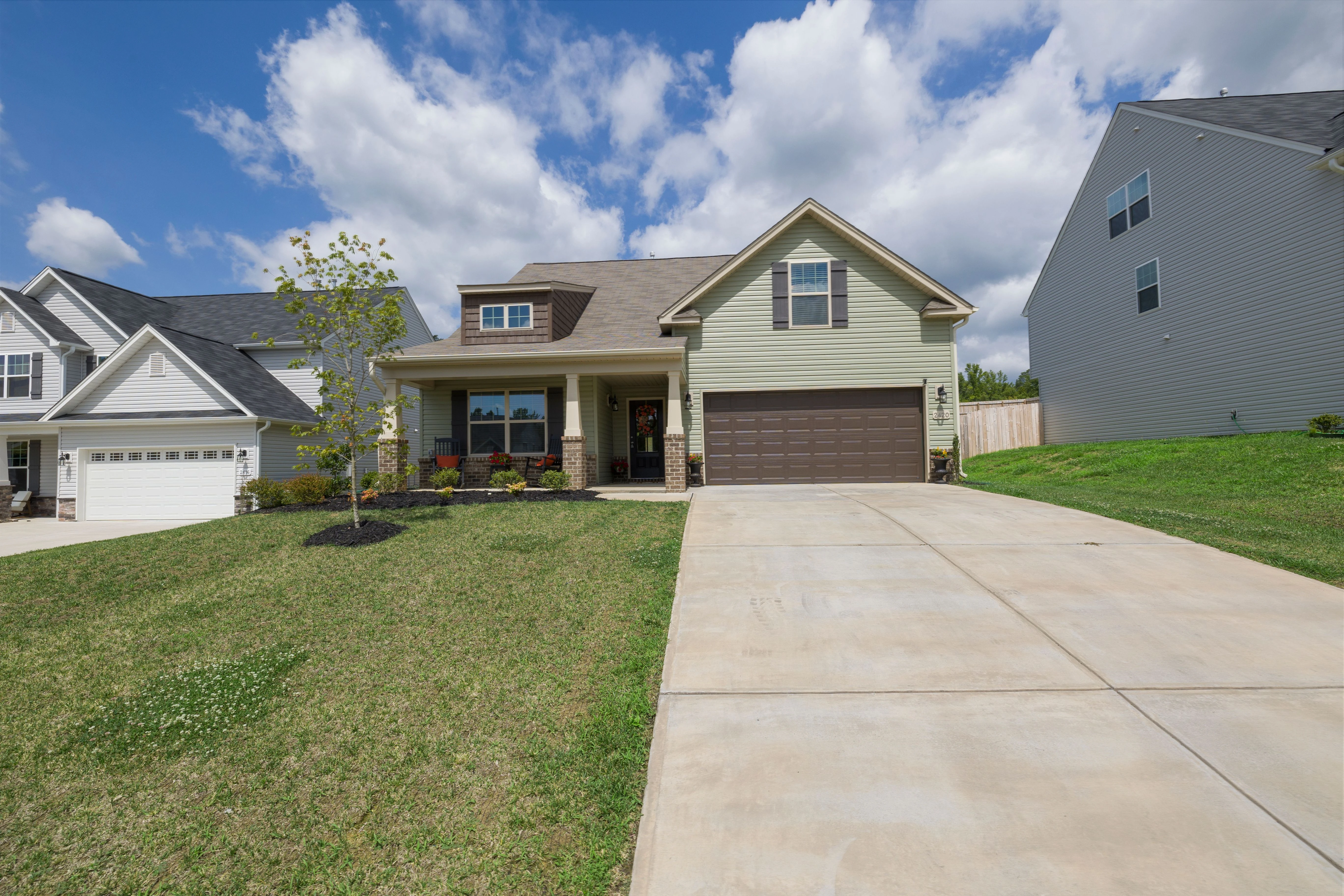
The starting point is always the opening as it actually is, not as the paperwork says it should be. On a house from the 1977 median build year, that usually means confirming whether the original extension springs and overhead track are still original or already replaced, since that changes what hardware the new door needs to hang correctly.
Winters in this part of the territory fall in the cold, severe band, so on an attached garage we'll usually recommend an insulated door even if the homeowner didn't ask for one specifically - it costs more up front and pays back in a quieter, less drafty garage, which matters more here than on a detached structure. Installation itself follows the same order every time: pull the old door and track, check and shim the jambs square, set new track and springs sized to the door's actual weight, hang the panels, and balance the door by hand before the opener ever gets bolted on. Rushing the balance step is the single most common shortcut that leads to a callback, so we don't skip it.
Questions
No. The company is based in Vienna and drives out to Dunn Loring for every job - it's about 2 miles, so travel isn't the bottleneck. There's no local branch or drop-off point here, just the crew coming from Vienna for the measurement visit and again for install.
Usually yes. Most Dunn Loring houses date to around 1977 and use standard opening sizes that stock sectional doors fit without modification. The exception is a garage that was resized during a later addition or conversion - those openings sometimes run off-spec and need framing work before a new door goes in.
Given the cold, severe winters this area sees, yes - an insulated door on an attached garage cuts down on drafts reaching the house side of the wall. It costs more than a bare steel door up front. On a detached garage with no heated space behind it, the payoff is smaller and it's a more optional upgrade.
It can be. Extension springs from that era weren't built for the duty cycles openers put on them today, and corrosion after decades of use raises the odds of a sudden failure. If the springs haven't been replaced since the house was built, that's usually the first thing worth having looked at during a new-door measurement visit.
Explore more
Ready when you are
Vienna Garage Door Pros repairs and installs garage doors, springs and openers in Vienna, VA and the surrounding area.